Daylight Robbery


The bee hotels I have under the veranda, where they are protected from the heat of the sun and the torrential summer rain, are often under attack by other creatures looking for advantage.
Here is one parasitic wasp laying into the nest of a Orange Tail Resin Bee, you can just see the ovipositor behind the middle legs in two pictures. Through it she deposits an egg which feeds on the bee larva and probably the store left for its initial growth.
It’s the way of nature that one thing depends on another for its sustenance. When one piece of the picture is missing there is a deficiency but things invariably balance out in the big picture – just as well for us most destructive humans.
And then there was light … as one more wasp is created, by design.
A wonderfully mysterious nature.
© Mark Berkery ……. Click the pix for a closer look
*
Wild Being

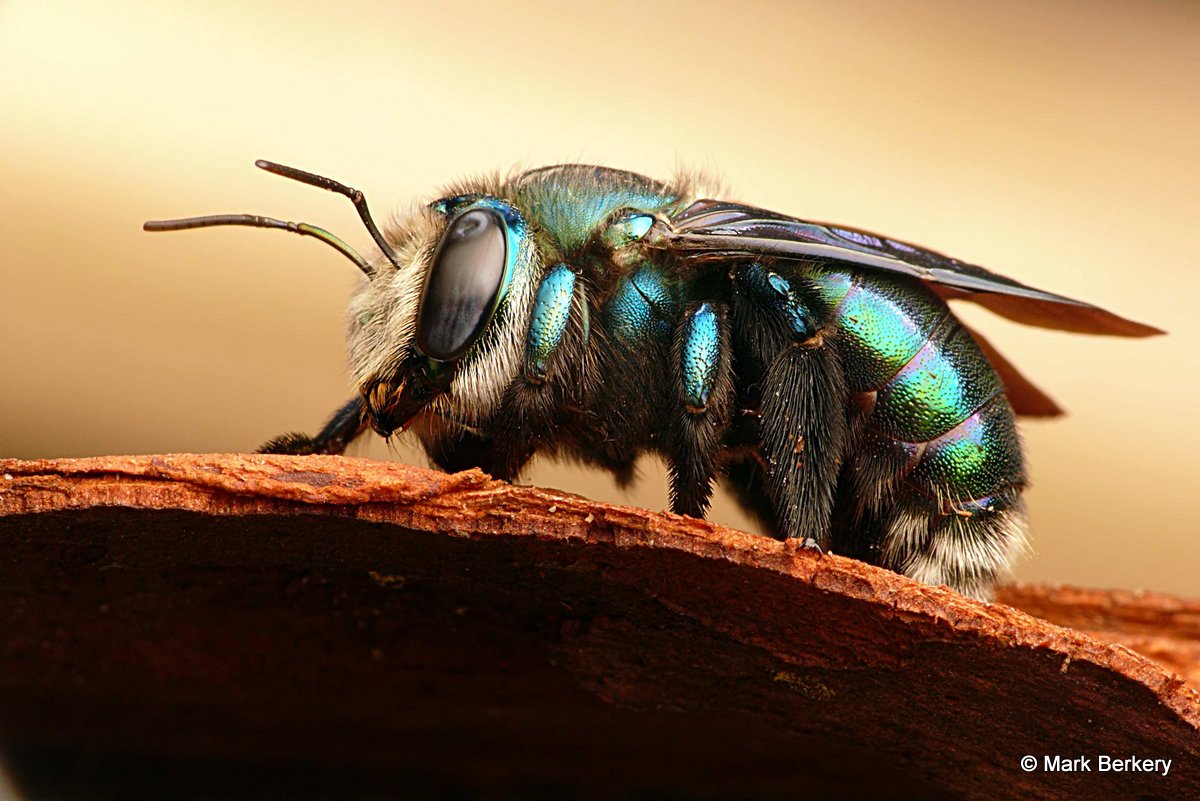
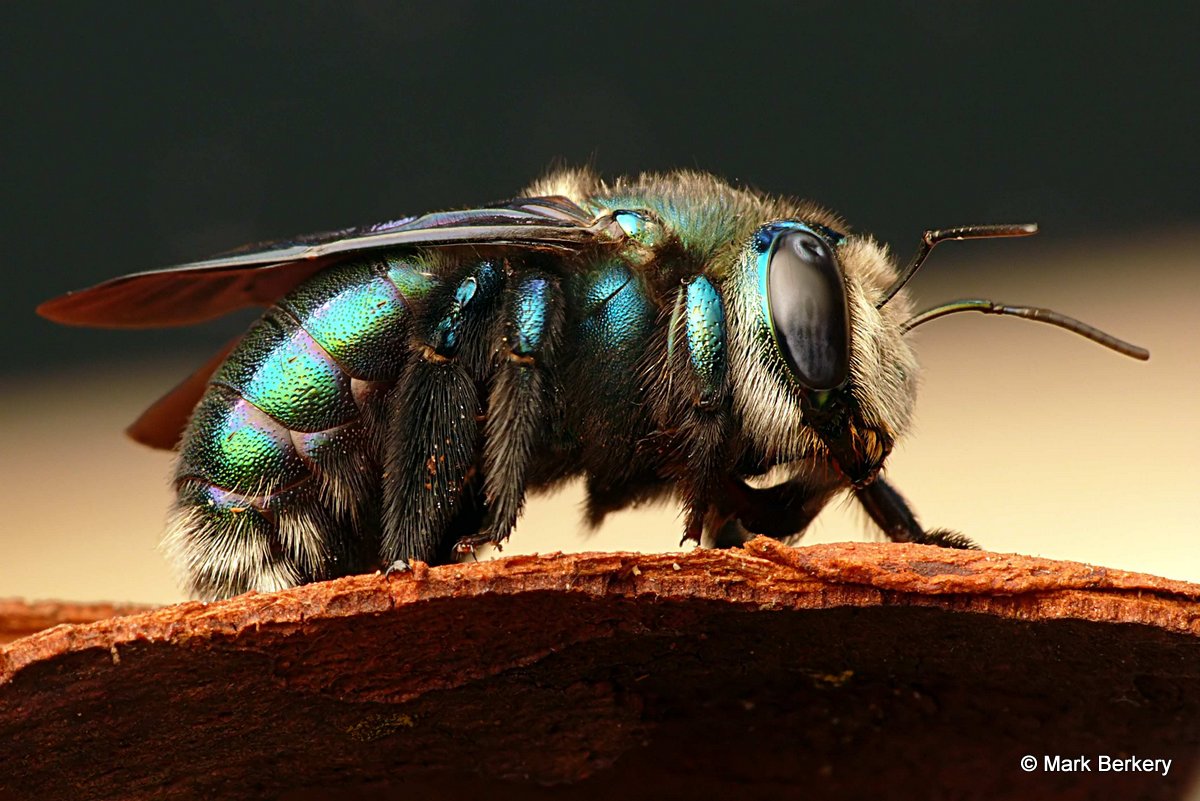
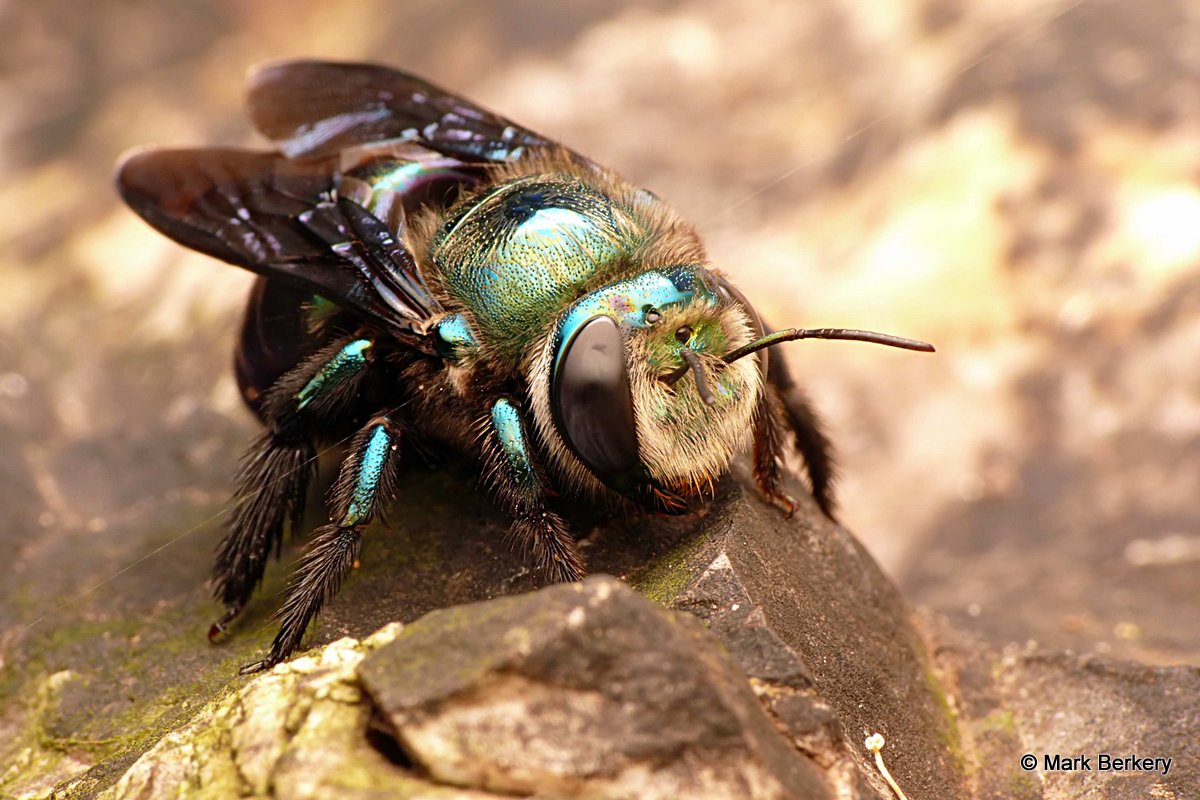
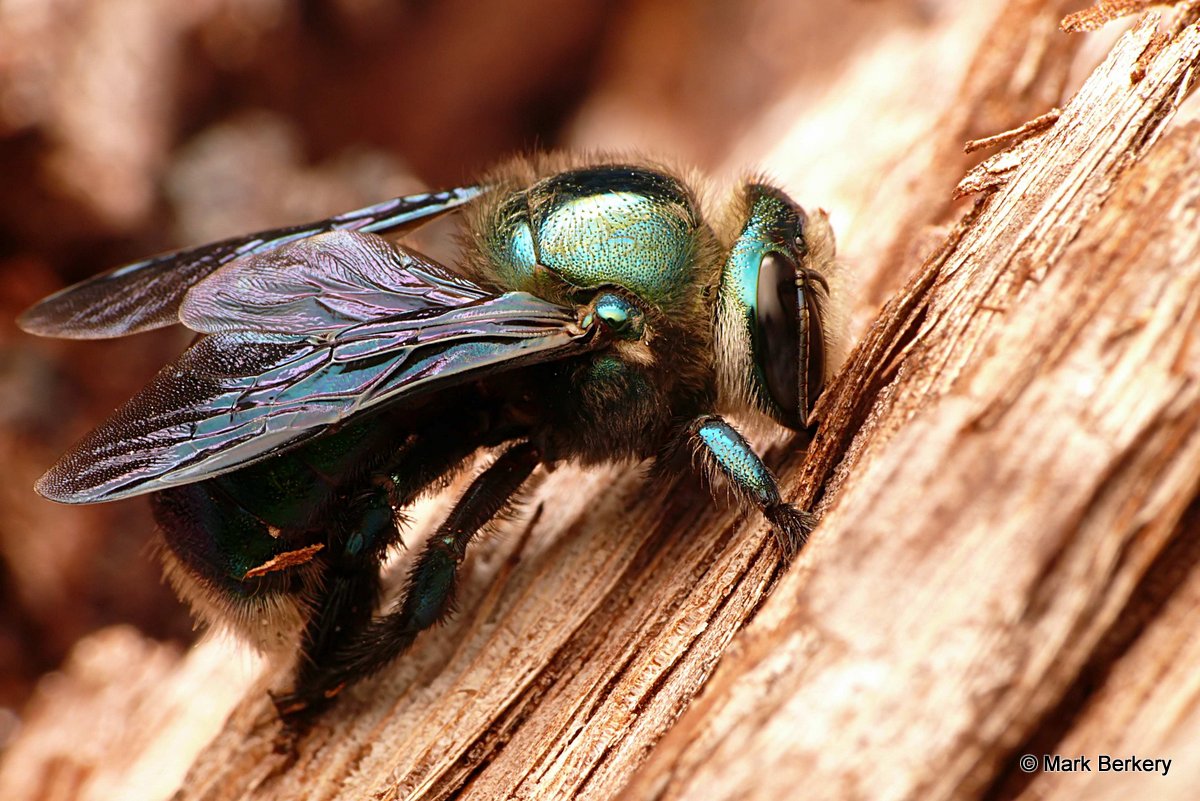
Bee on my stick …

Click on pix to see bigger version in new tab.


Climbing to the sun …
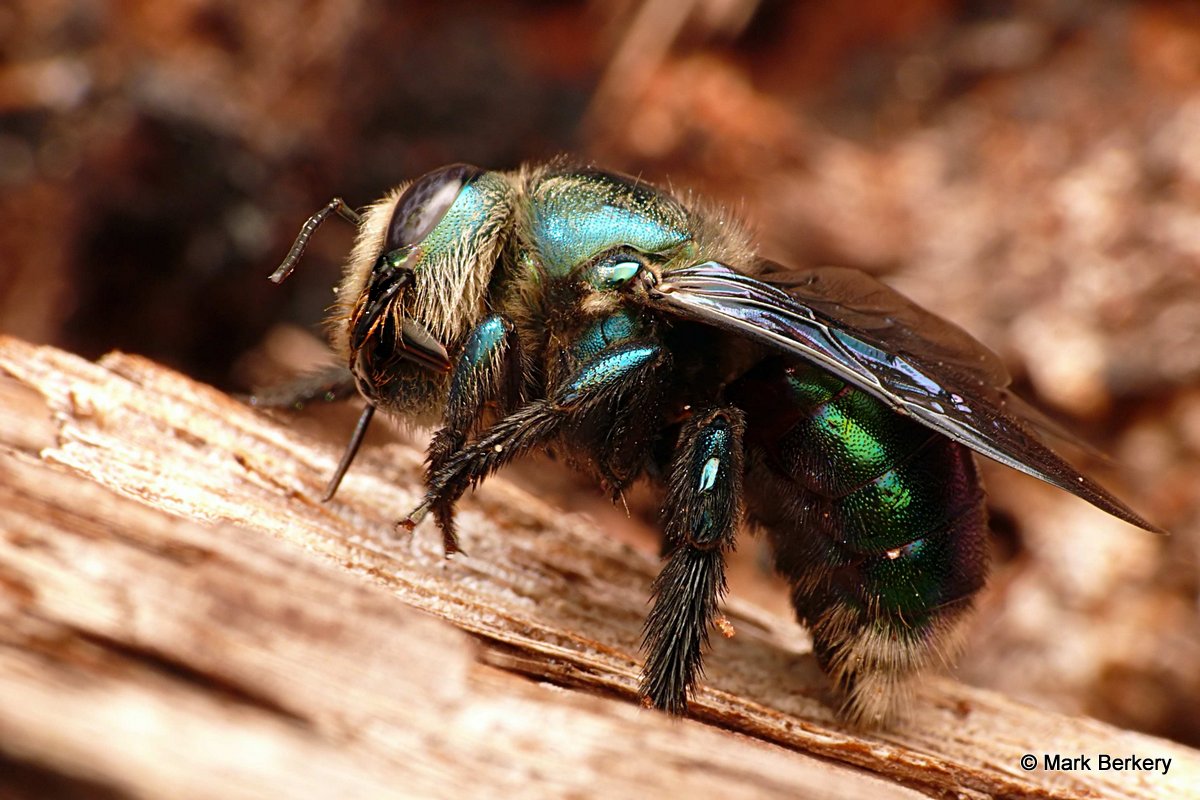
Have only seen those ‘cutters’ behind the mandibles on a Carpenter Bee
I hadn’t been to Venman for a while and didn’t take my camera on the walk, thinking to just enjoy the cooler wet woods without consideration for a picture, of anything – it had been raining much and I had no mind for hunting.
Along the way the path was flooded and I noticed a commotion on the water’s surface and could see plainly a large insect was in trouble, on its back, wide wings keeping it from sinking, so I offered my stick and it gripped it without hesitation.
It wasn’t the first time I had done such a thing and knew it was only a matter of time before she was recovered and away on the wing, it being a bee’s nature to busy itself. It climbed a few inches and stopped, resting, recovering from its watery struggle.
Walking on I gave it time to wake up and it didn’t move again so I kept it in my shadow, protected from the wind, as I slowly made my way back to the van, where the camera was, and set her up on a dry surface in the sun and took a few shots.
She soon got moving again and after a while tried to fly away but without success, launching into the air but unable to sustain flight for more than a couple feet. I picked her up again and she made use of different surfaces, bark, stone and tree.
I didn’t see at the time but in the pix it is apparent she was damaged on the upper right eye and head, it was a windy day, which would account for her crashing to the water.
Falling back to earth a few times I kept her from the ants and eventually set her climbing a tall tree into the sunshine, was where I left her.
Eventually we’ve got to leave the wild to be …
© Mark Berkery ……. Click the pix for a closer look
*
*
The Company Of Bees
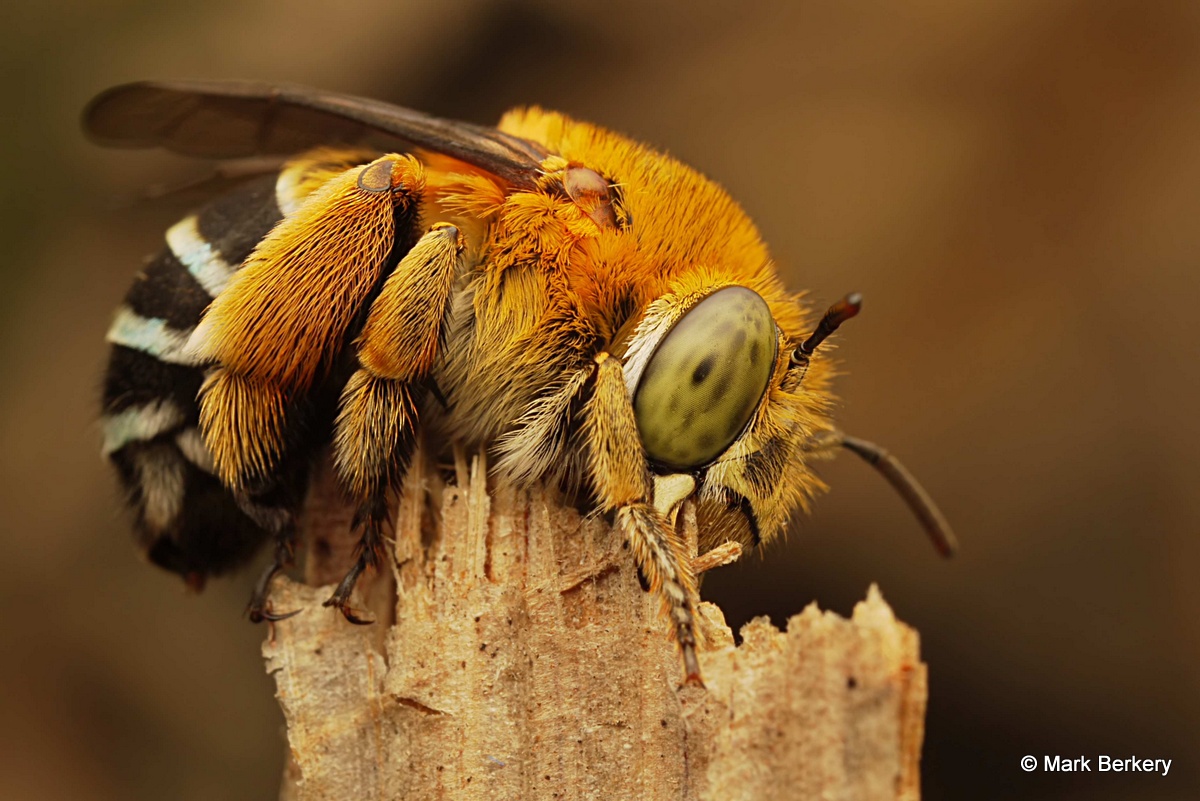


Between the recent heat of the day and the rain and wind at night there are few opportunities for shooting Blue Banded Bees. It’s only when they are either feeding or sleeping that they are at all approachable.
During the day they rarely stop for more than a second or two at a flower and I don’t have the equipment for that. So I walk the garden at dusk listening for the tell-tale sound as they approach and select a place to sleep for the coming night.
Sometime during the night I will set up a shot or two and the primary concern is to not disturb them. If they wake they will fly into the dark and may be lost to the night hunters, of which there are many.
It’s why the bees sleep where they do, gripping a stem off the ground and at the end of a branch where there is no through traffic or passers by, to increase their chances of waking in the morning – they are not stupid.
And if a predator does happen upon one during the night it will automatically splay its legs in all directions to make itself bigger and would be a bit thorny to eat, with its hooked feet the first contact.
Once the morning comes they are up and about before any other bee I know, hardy little creatures, bullets of blue and red and black darting about, with purpose.
Even when it’s raining heavily they are up and about, a pleasure to watch, the way they control their flight in tight spots in their search for food – known to favour blue flowers.
Bees being bees … not to be confused with butterflies …
© Mark Berkery ……. Click the pix for a closer look
*
*
Old Moulds …
break … eventually.

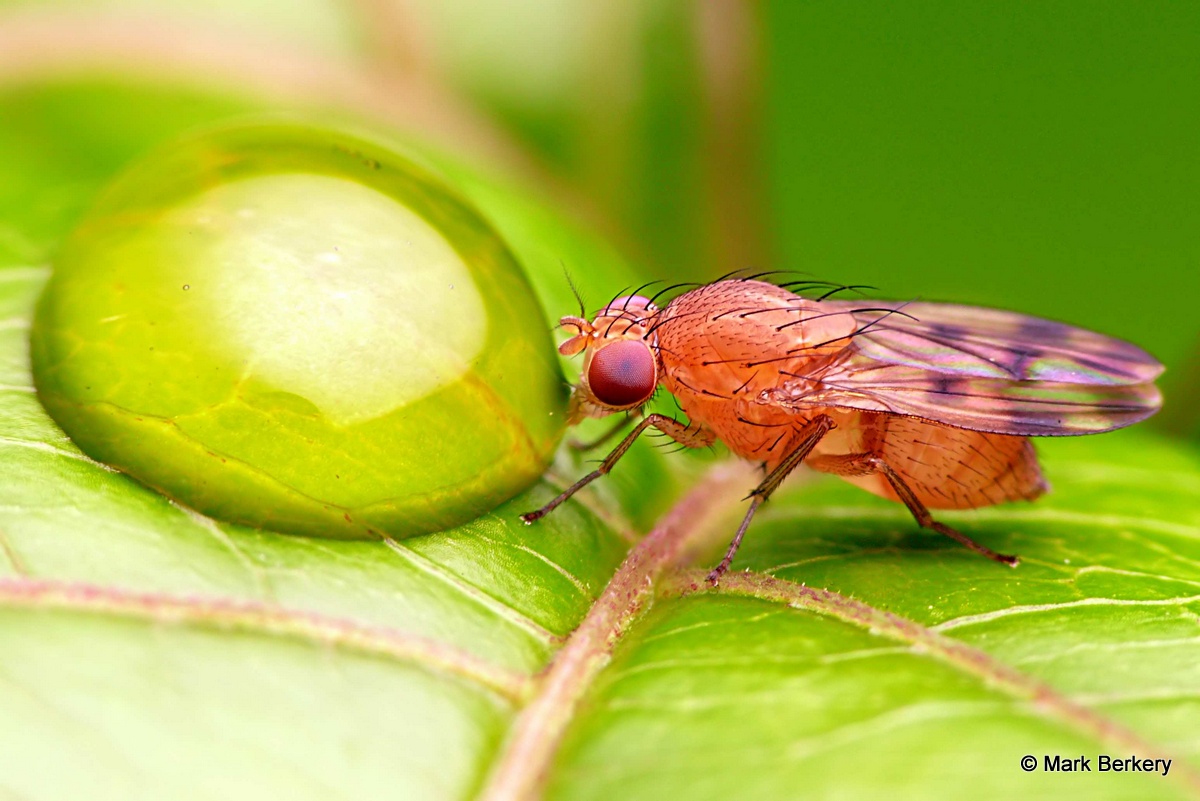

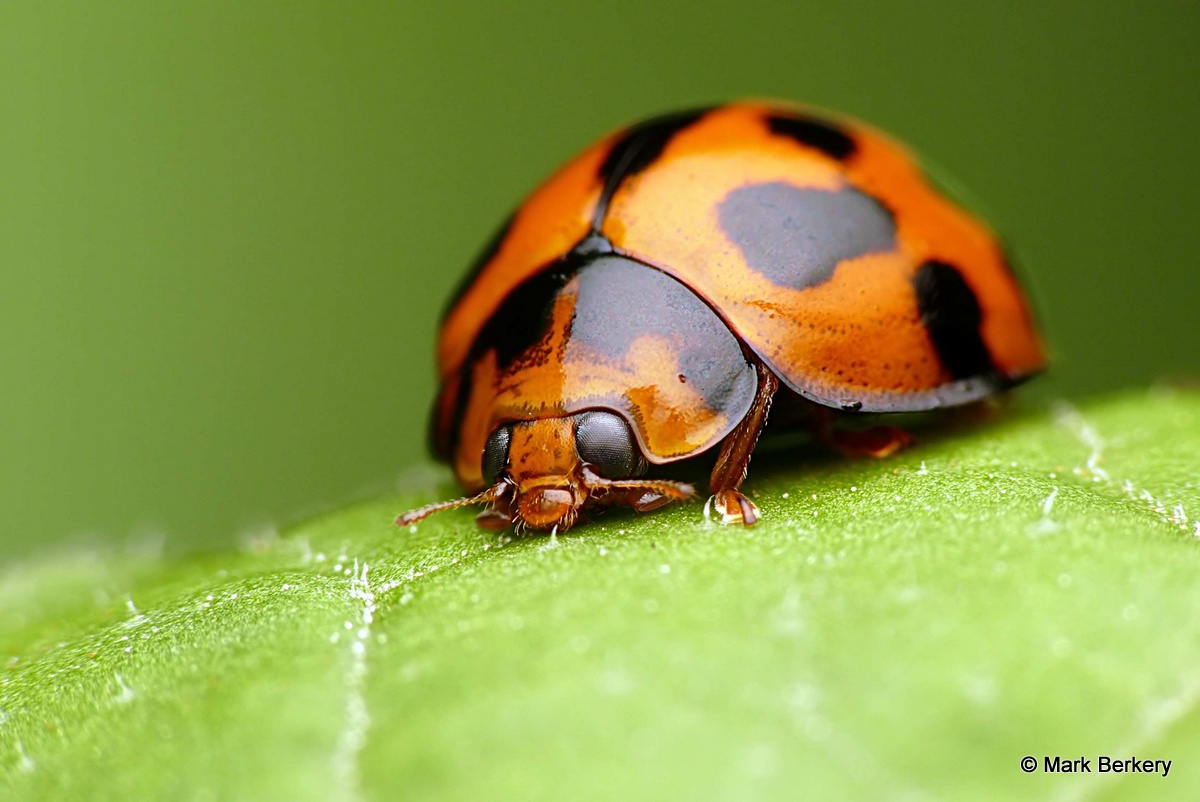


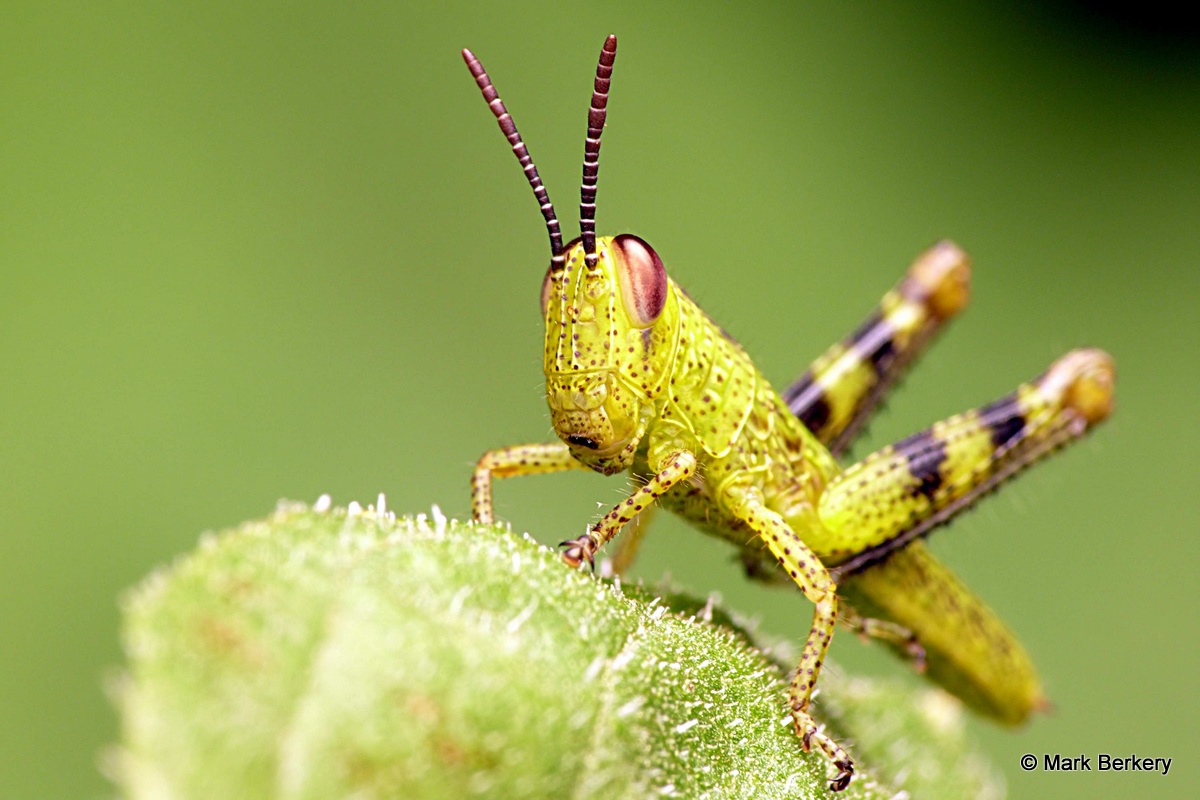

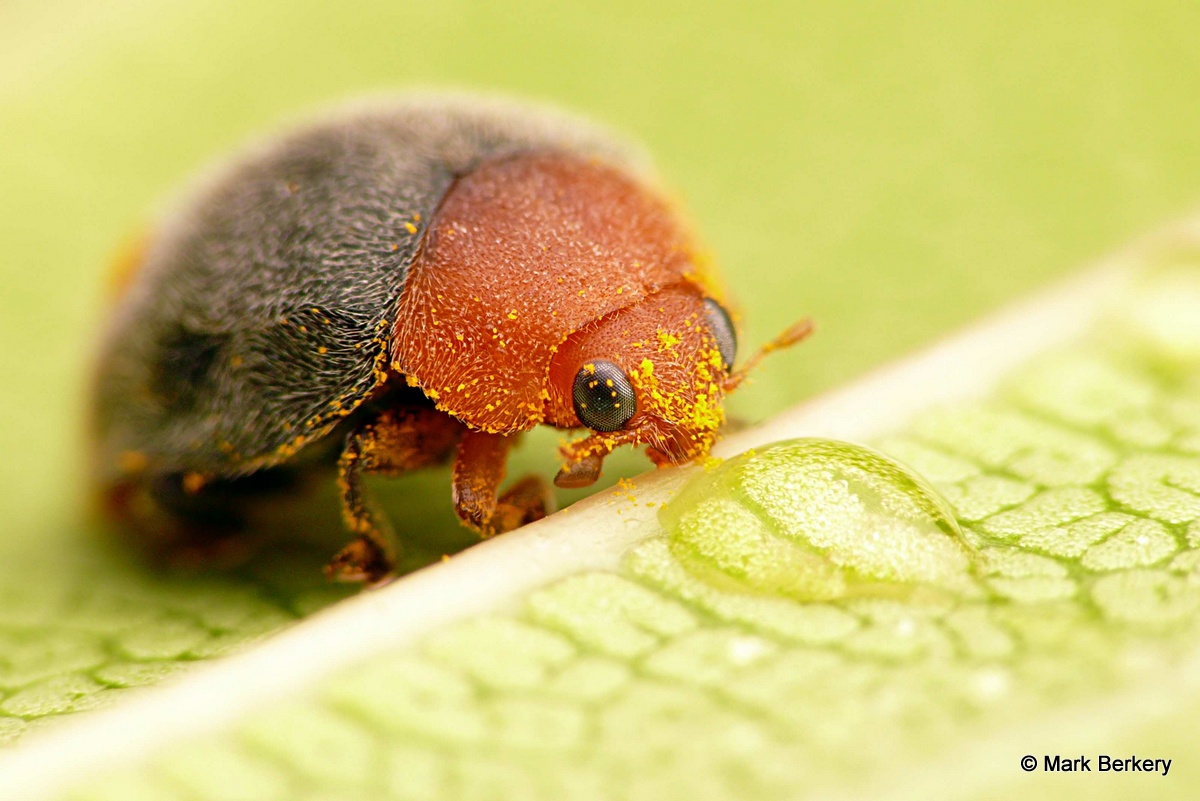
It can be difficult to break from the diktat of previous form. So I thought, again, to show some of the variety of the garden, for your viewing pleasure – and mine. Outside my usual ‘sets’, here is a small sample of the wondrous creatures that come and go in the usually unseen world at our feet.
© Mark Berkery ……. Click the pix for a closer look
*
*
Treasure Ant


And a little treasure they are, caretakers of the dead, diggers of the soil. Indispensable pieces in the great Earth machine.
*
It’s that time of season the only creatures around are ants, or so it seems. The passion fruit vine, with its highways and byways and the wonderful smell of exotic flowers is home to many kinds of ants, all patrolling for a bite to eat, a little nourishment. The only way to get a shot is to stop one and food does the trick.
I’ve watched an ant eat until it looked like bursting, its abdomen swelling to accommodate the liquid gold. A little honey stops an ant in its tracks, some feed until it can take no more, and off back to the nest it goes – I suspect – to share the treasure. Sometimes with an initial stagger from the unaccustomed weight and balance.
We do it too, with all the momentary treasures of a single lifetime, absorb and distil the essence to eventually radiate as our light or wisdom – after many years climbing around on the vine of experience, you may have noticed.
Whether the treasure is real or illusory, when it’s gone we move on, ever in search of the next de-light. Until the endlessness of the search is seen to be the grand delusion.
Then now is all there is, no loss or need to search, no ignorance nor despair. No need to experience any more, no need, no need.
Still, inside, there is the nourishment of the simple good, no thing, no form, no problem.
And the reality of the moment grows in focussed attention.
© Mark Berkery ……. Click the pix for a closer look
*
Dear Bee …

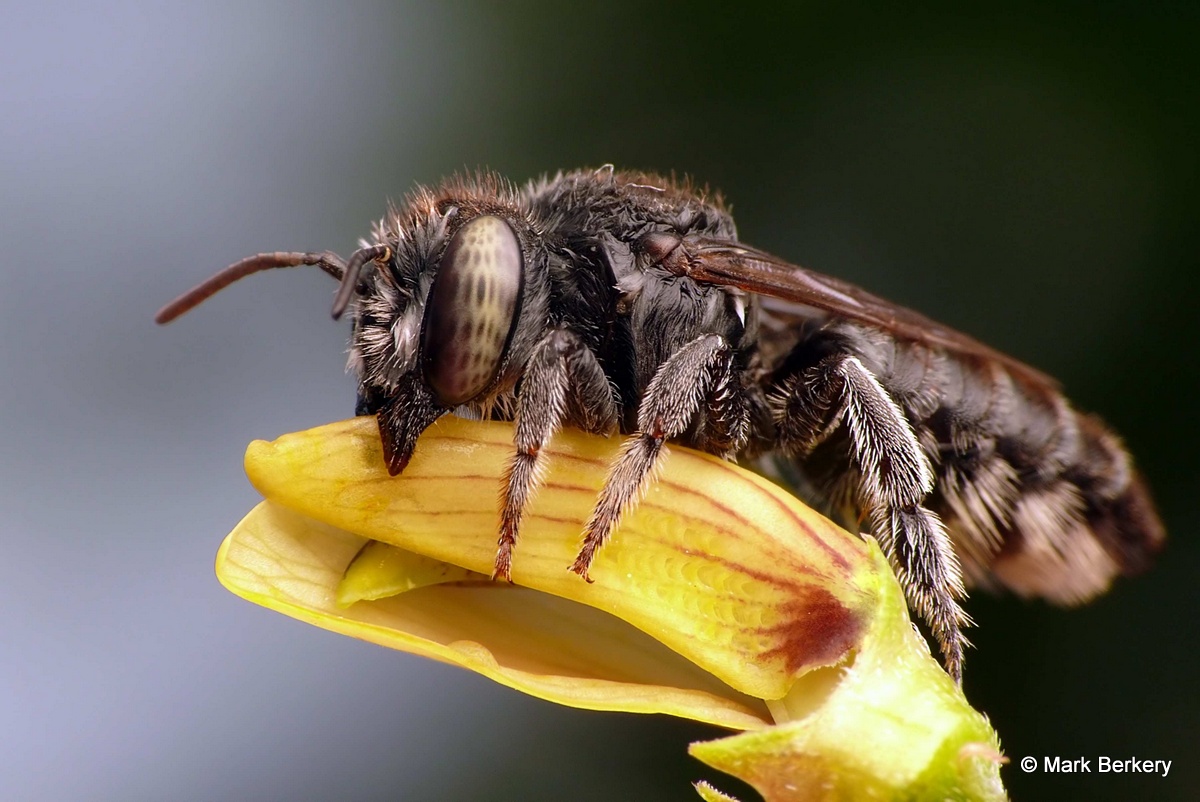


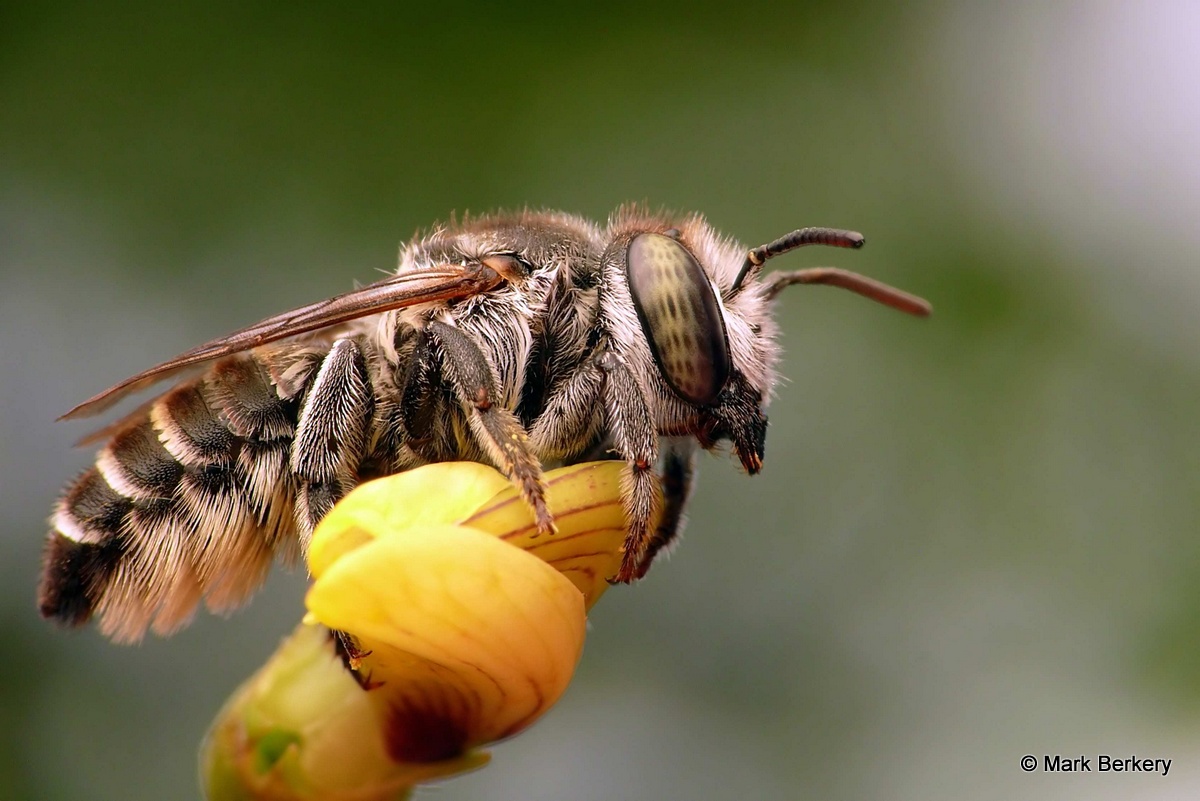

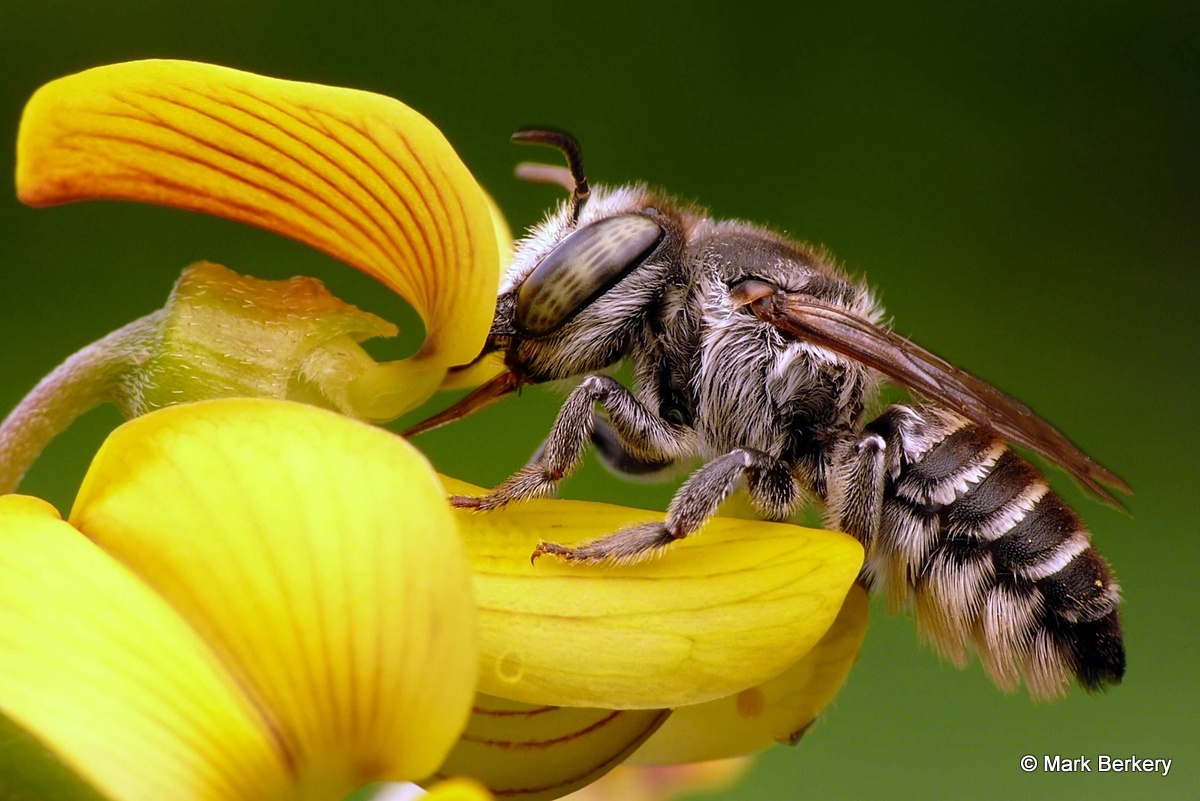
All of a sudden it went from hot to cold and you were caught out in the rain, needing heat to fly, weighed down by water. Lucky there was a flower to land on and wait out the weather.
When I saw you the rain had been falling for a day and you looked on the verge of drowning but I’m sure your kind are no strangers to such events, or the hunger that drives.
Regardless, I arranged some background to shoot against and after a while the flower you gripped so tight fell from the stem to the earth, naturally worn out, dead.
So I picked you up, still gripping the dead flower, and brought you to where we could both relax and recover. It was easier for me to shoot from a stool and you dried out, good all round.
After a while you started to move and flex your wings, and I knew it wouldn’t be long before you were away on the breeze, rain permitting, in search of your fulfilment, as a bee.
And as I watched that’s exactly what you did, took to the air, and I saw you fade to the distance, a small dark dot becoming nothing quickly – disappeared from sense, no more in mind.
*
I went for a walk in the garden, camera in hand, and there you were again, or a brother or sister, feeding on the same kind of flower, still a little tired from the weather event.
Climbing, not flying, from flower to flower, so unlike a bee, I waited until you were occupied, focussed, and moved in for a shot, or two, and I was lucky.
We were lucky, I got some pix, you got to live a little more, eat, then fly away, doing bee things.
Not a bad day’s work at all, for a monkey and a bee.
On the earth that makes and breaks us …
… what we are and what we are not.
© Mark Berkery ……. Click any picture and click again to enlarge
*
Denizen …
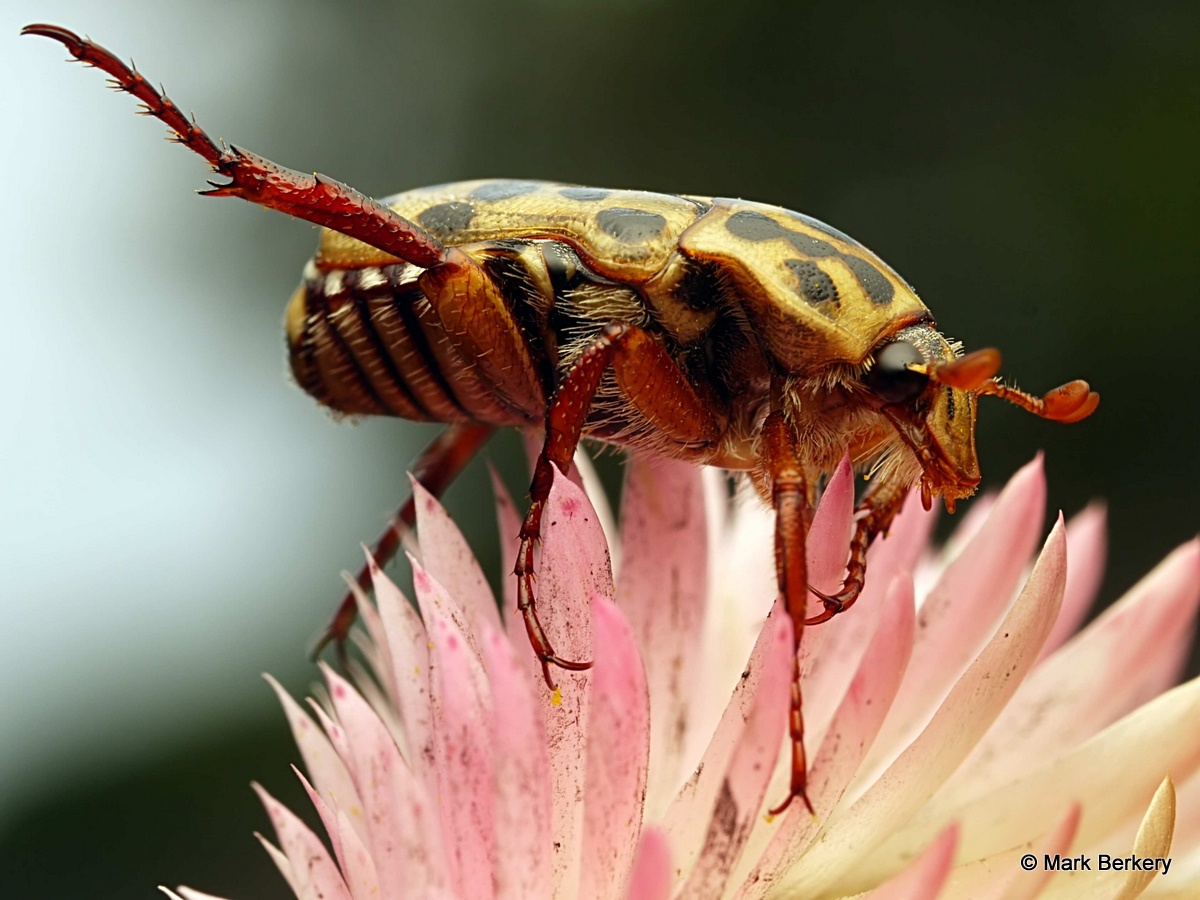

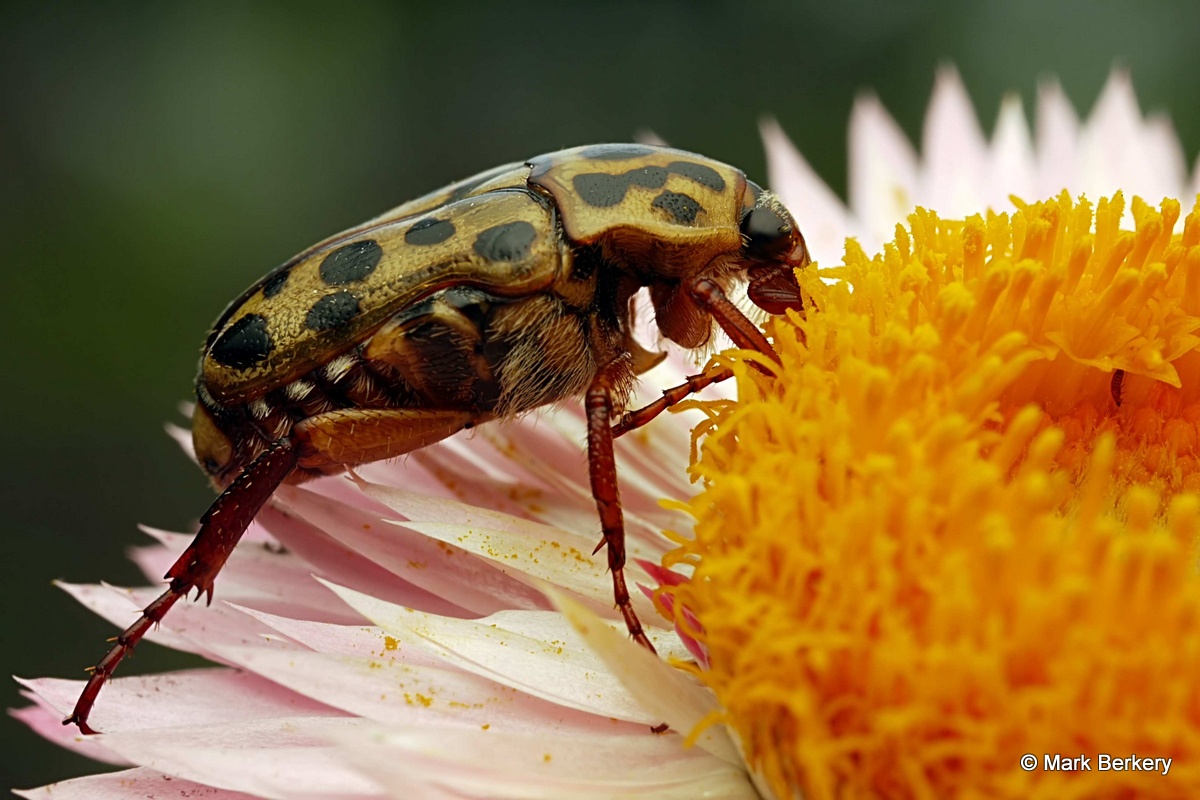
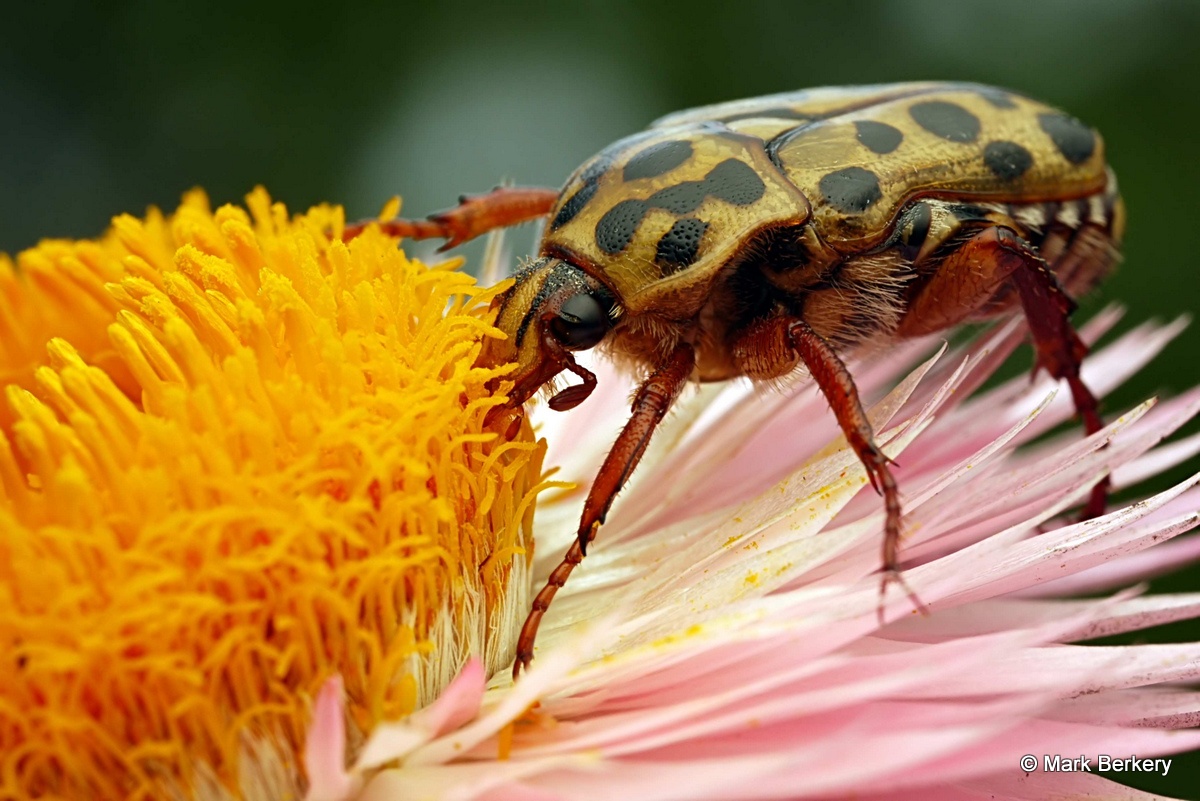
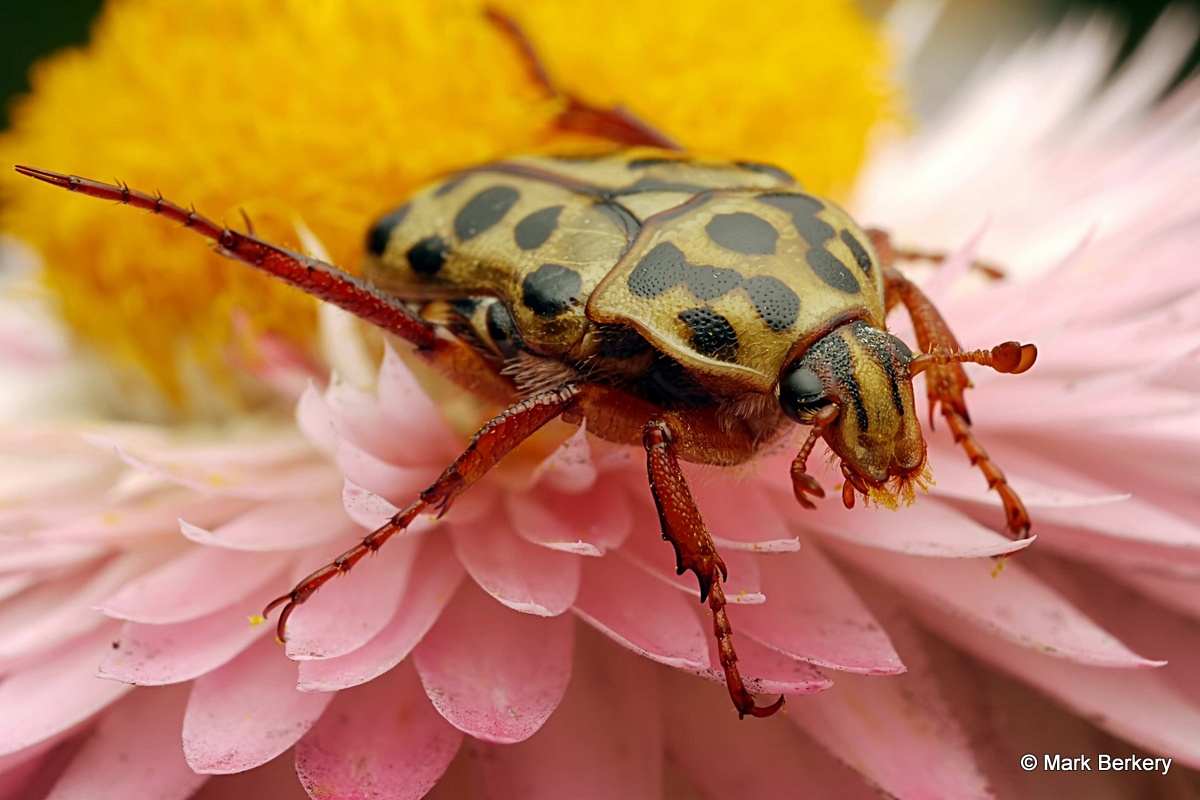
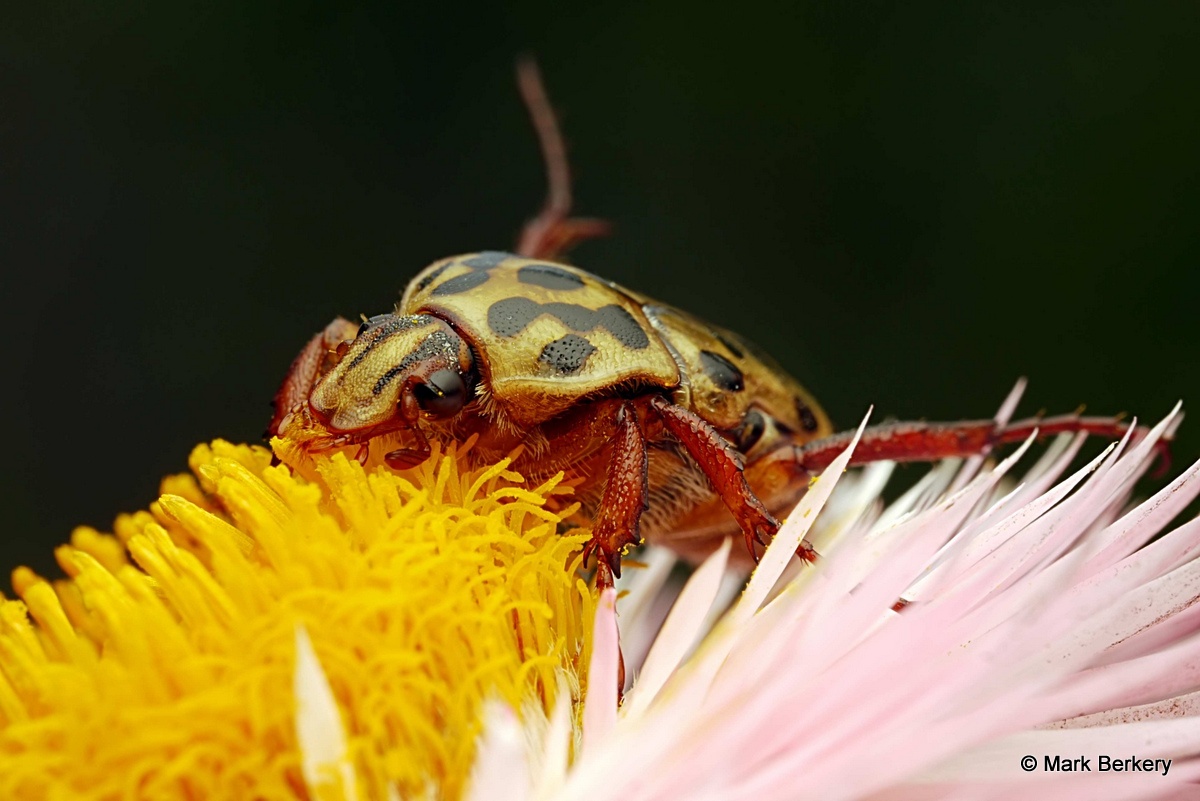

Occasionally I see these huge beetles flying around the garden, with a loud buzz to match. They do command attention.
The ones I get close to though are already stopped, such as the one pictured – I call them Leopard Beetles, for the markings – frolicking in the flowers.
It was climbing around one of the straw flowers, munching away on the pollen, so I took the opportunity for a few shots.
Others I have seen in the flowers of the garden have ended up as food for the Kookaburra or the Pied Magpie. Two who keep a close eye out for a morsel.
There seems to be enough to go around, for now.
© Mark Berkery ……. Click any picture and click again to enlarge
*
Bee-haviour
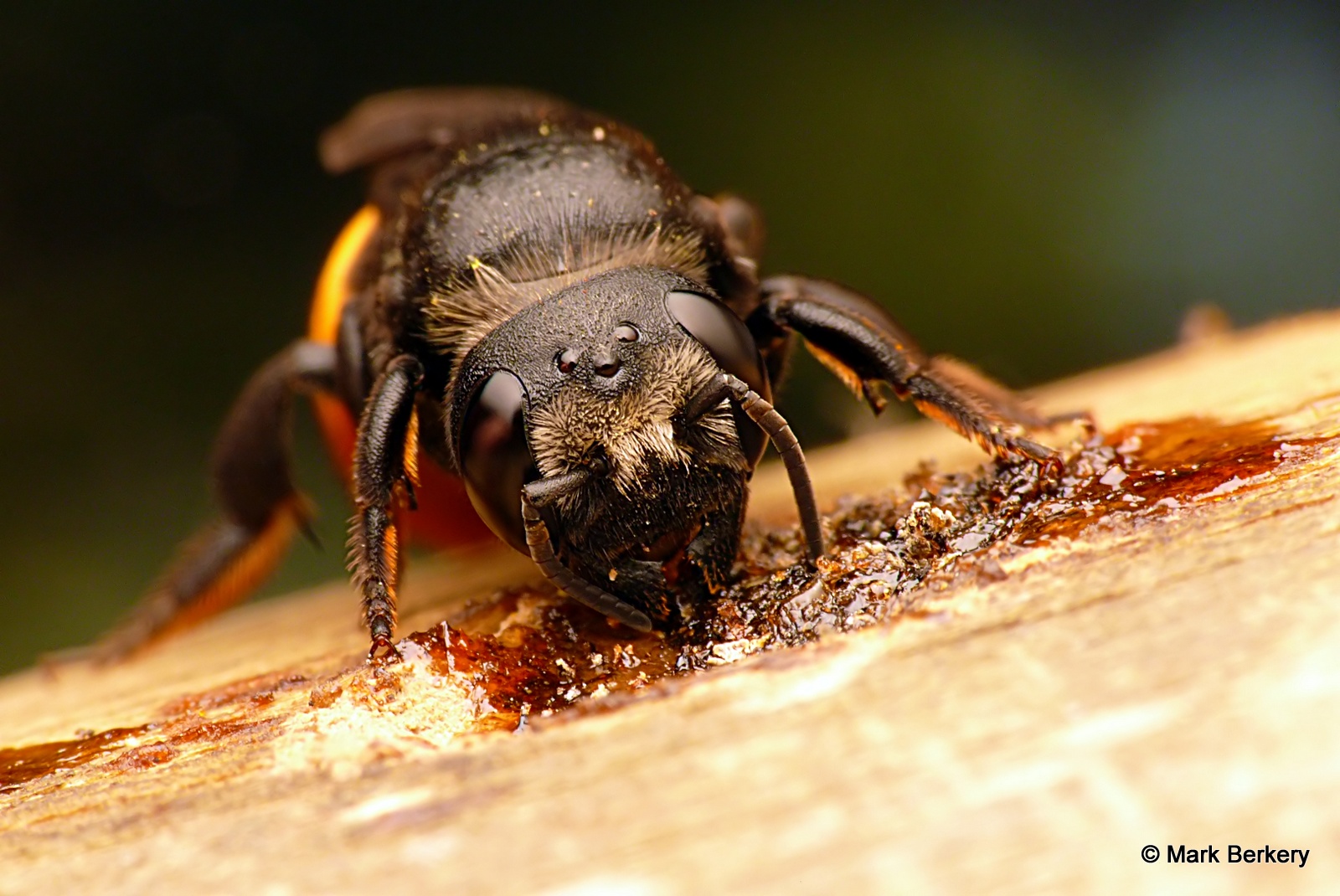
Sealing the entrance – When all else is done.

A little pollen might help – Sure won’t harm.

Feasting Bee – Unseen injury.

Wasp – Robbing the life of a bee – What they do.

Young one – The new born often turn to see whence they come – Reflection?

A case of mistaken identity? She seemed to think so.

Alone at last.

When all else is done, sleep and die at home on a leaf.

Let go, let go … I saw it first.
Under the veranda at front of the house is where I keep some tools and do much of my preparations for the garden. It’s also where I hang the few bee hotels, wooden posts about 8″ diameter x a few feet long drilled to accommodate any creature so inclined to nest – not just bees. So I am around the comings and goings of the dominant native bee, the Orange Tail Resin Bee, as she makes her nests, is born again, mates and dies.
I have noticed in the last bee-busy week a few weakened bees on the floor – or in a tray I have placed to catch any fallen ones. These bees are unable to fly it seems, so I gather them up and give them every chance to get things together. I present them with water, pollen (in a picked flower), put them in sun or shade and let them climb as high as they can to launch from. I usually end up putting them in one of the plant pots they can explore on the way to being a bee. They may never fly but they don’t die hungry in the dust on hard concrete.
Some are small enough to be new born and others are big enough to be mature. I suspect the young ones may be damaged by something while in the nest, maybe the parasitising Ichneumon Wasp, or other such wasps that can be seen visiting these hotels. The bigger ones are probably females worn out by the constant work of breeding and nest making and all the preparations that go into it. It’s a lot she has to do when the male only has to ambush her – not known as charming man, but driven.
I saw this slow flying mass wandering above the garden the other day and thought it one of those big cumbersome beetles. When it landed and I got close I could see it was two bees mating, or he was trying to mate and ‘she’ scratching at him – didn’t look too successful to me. Eventually he gave up and the other, she I presume, took a good grip of a leaf and rested a while – which was a boon to me.
While back at the nests she was busy filling and sealing the entrance, then off she went again.
Until the next cycle … of birth and death, and everything in between.
© Mark Berkery ……. Click any picture and click again to enlarge
*
Smiley …

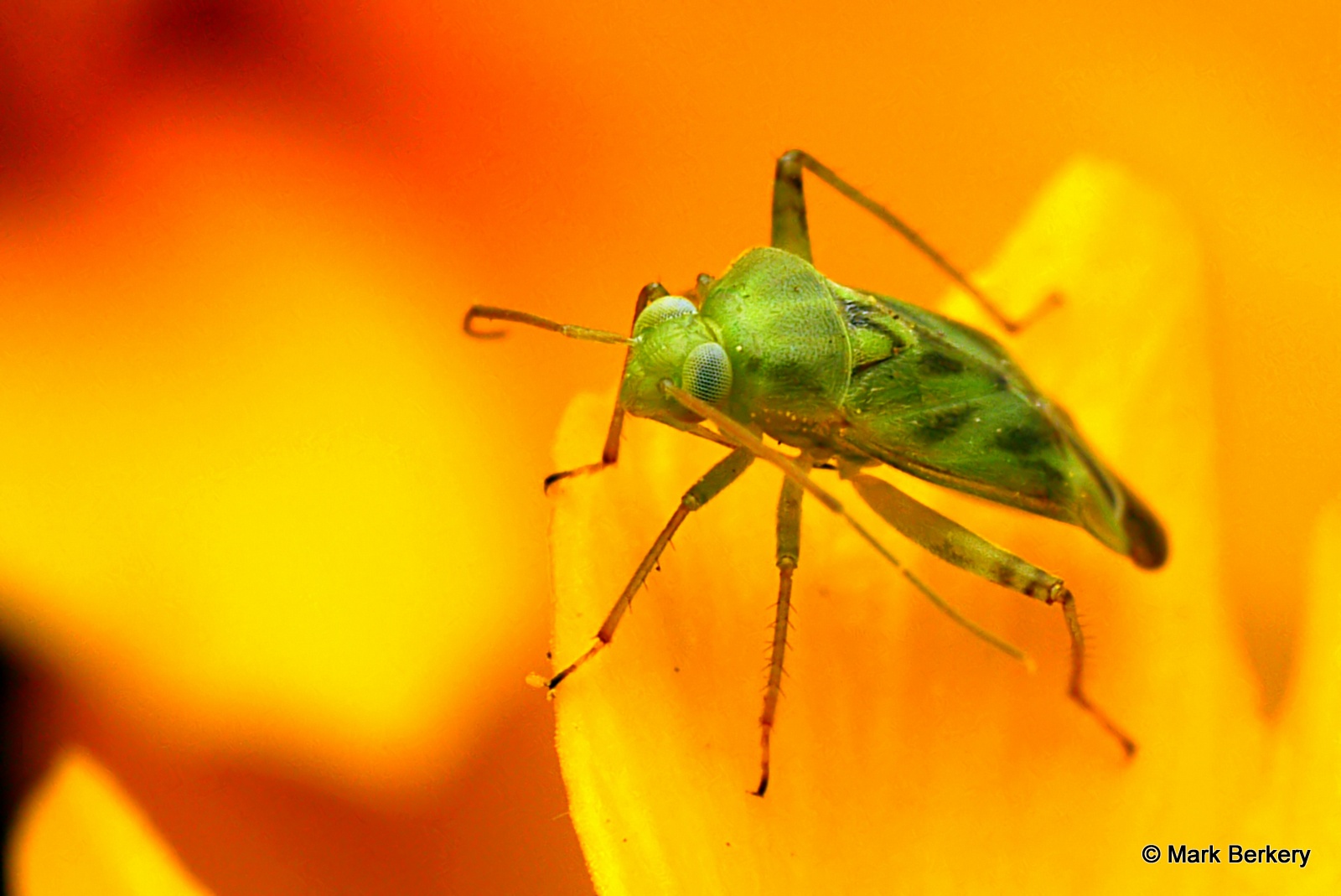
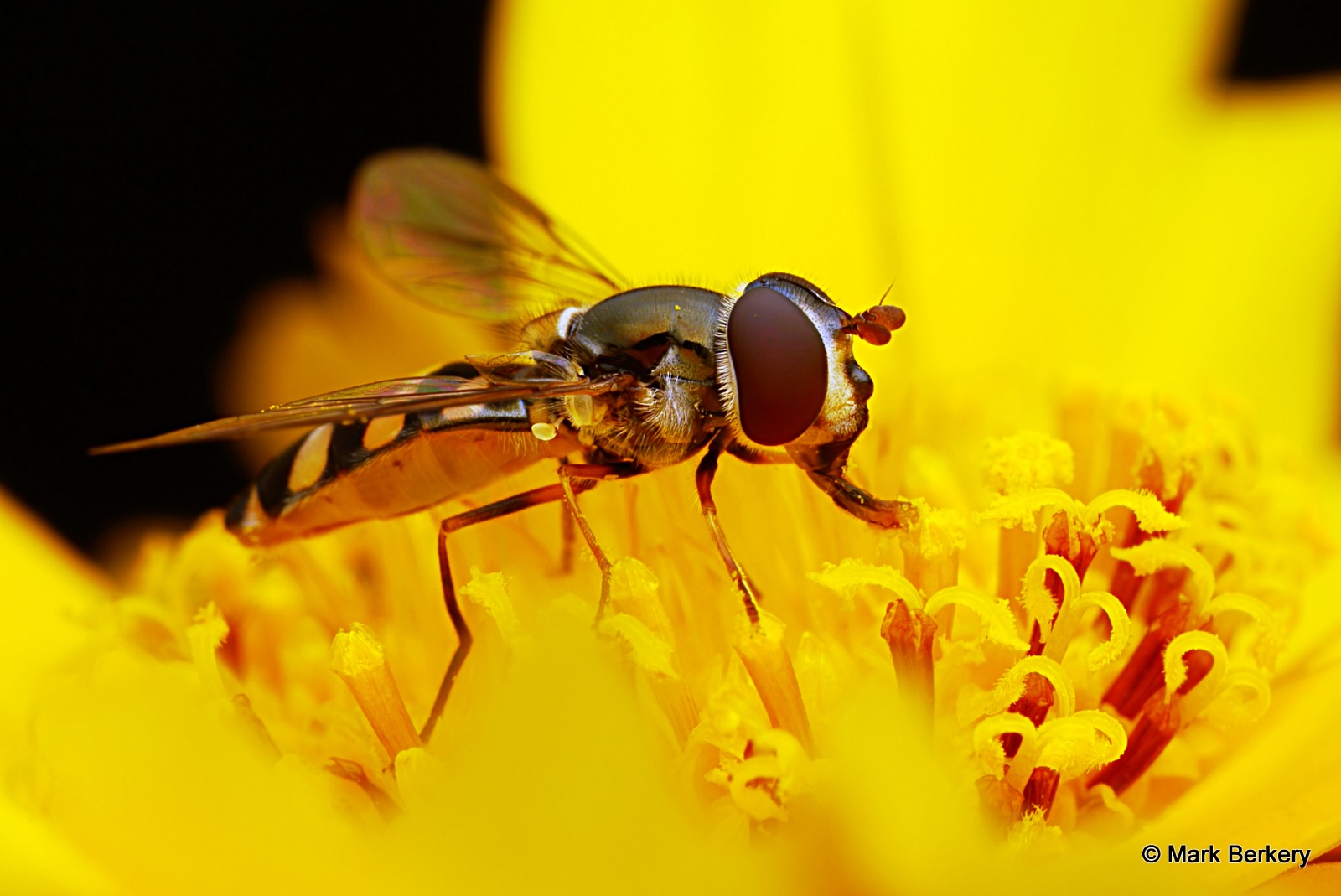
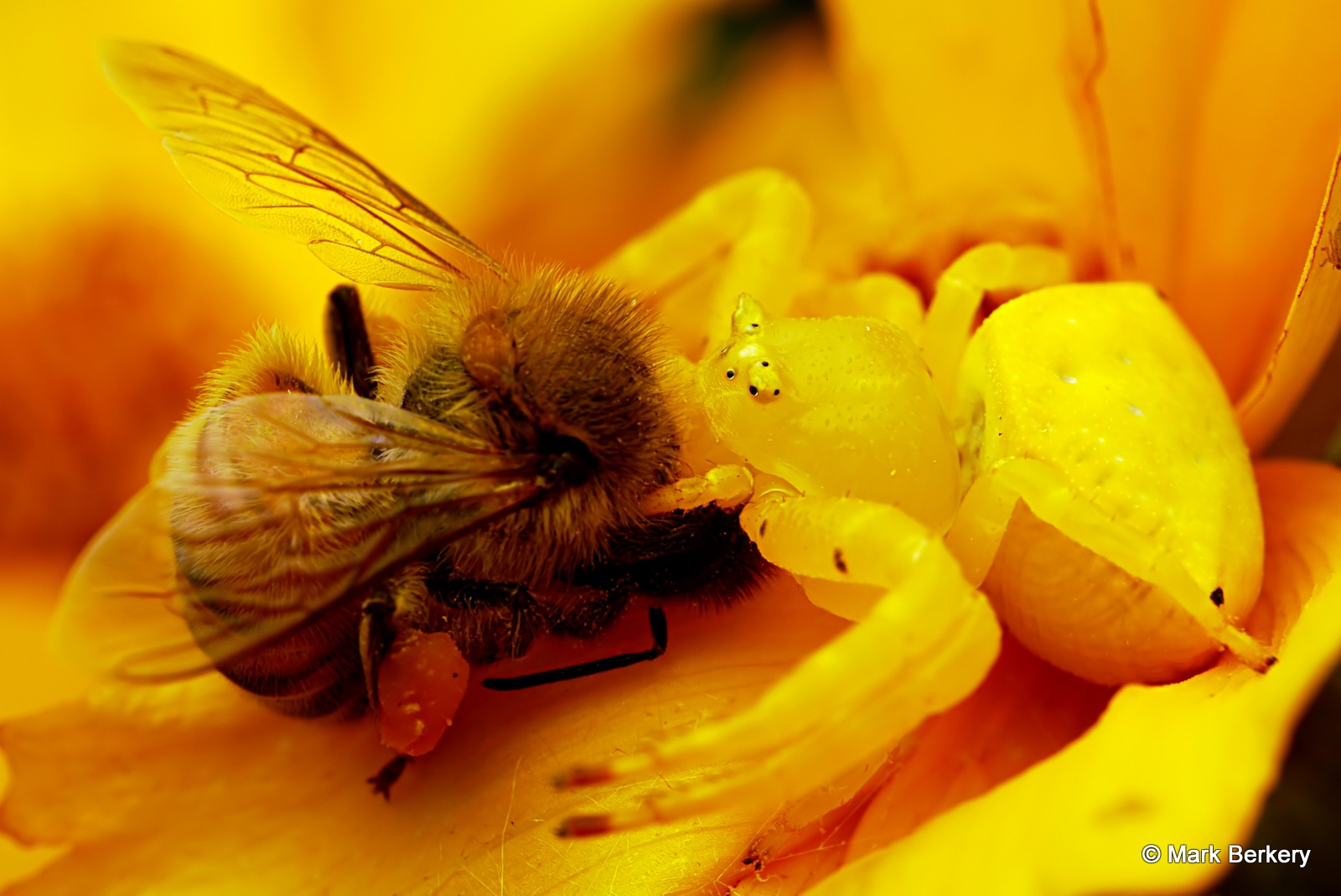
Did you know a spider smiles? Yes, somewhere, inside, below the surface appearance every spider smiles instinctively, psychically.
They smile because that is the natural state of things when there is no problem. And a spider never has a problem because a spider doesn’t think and get emotional.
Maybe they are on to something there, instinctively. Something we the people can perhaps learn from. Though we think, and it seems often too much, we can get back to the perfect instinct.
The instinct that allows no unnecessary thought and right action in the moment, and starts with the simple pure sensation inside, the tingling or pressure in every part of every body.
We only have to relearn it. After all we were once instinctive creatures, just like the spider and the fly. And it begins with attention to …
*
Did you know every insect meditates? Yes, every fly, bee or bug … Except in flight from the spider.
And, in death, there is just no more need – for the insects, or we the people.
© Mark Berkery ……. Click any picture and click again to enlarge
*


 Nature's Place
24 comments