To The Rescue …

Clinging to the rescue straw.

Catching the breeze on the edge of a leaf.
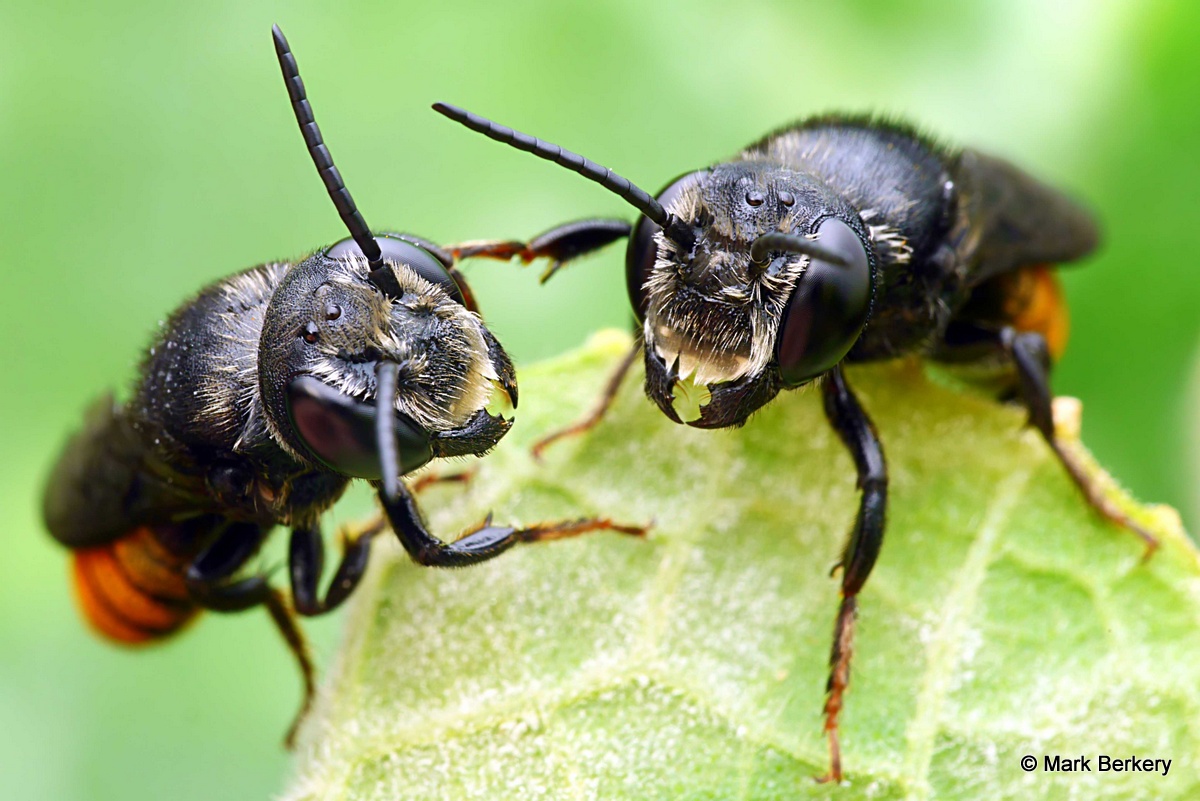
Jeez, that was close mate. You ok?

Don’t fall off now, that wind is strong.
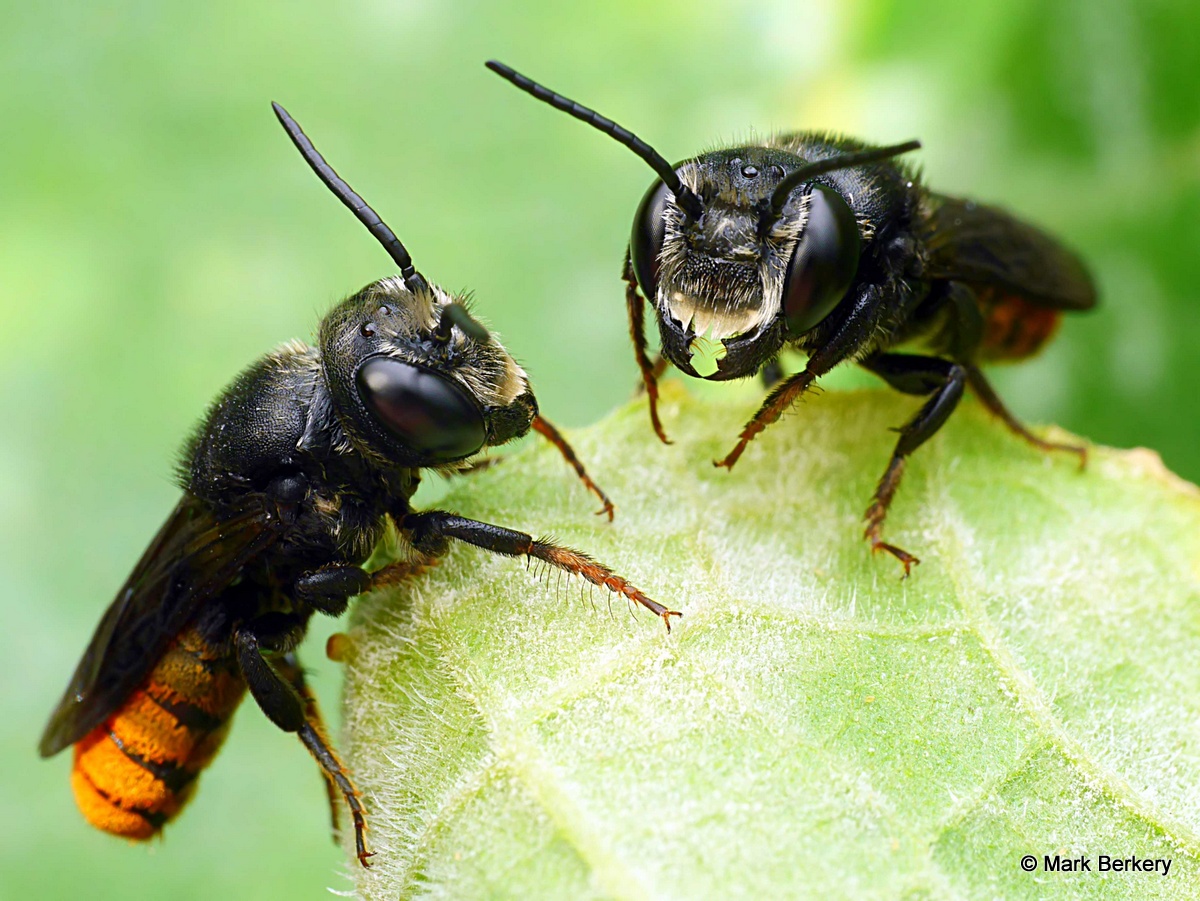
No worries, just catching it to dry the wings.

Ahh, it’s nice here in the warm sun.
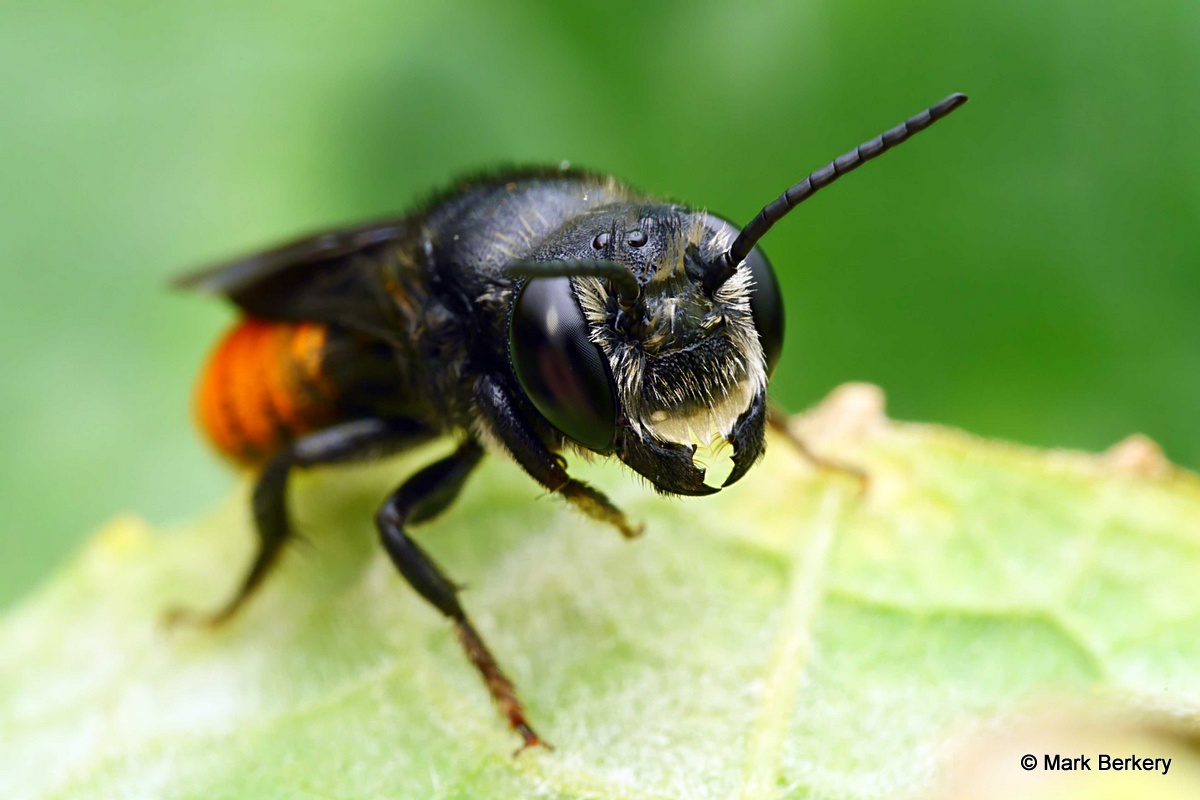
Thanks for the help mate.
The rain came and with it the ready bees in the hotel under the veranda burst out into the world of sense, colour, scent, form, sound and the touch of another.
They wait for a few days after enough rain so there would be conditions conducive to survival, moisture and food in the form of flowers. And of course resin to build and seal their nests with – in the case of the Orange Tail Resin Bees.
It had been a while since there were many of these bees flying around the garden, it being so hot and dry I suspect as cause, and then I started seeing them. One here and there, and then I went looking around the hotels and started finding them floating in the watering cans – I leave them sitting for the chlorine to evaporate.
Can’t have that, so started a rescue mission and retrieved five or six from a watery end over a couple days, two pairs – my early morning sleeplessness as advantage. Set out some water they can land on and take off from, and no more bees in the cans, so far. This is during the last week, after I got out of hospital and was supposed to be doing nothing at all.
Hospital was a rescue of a different kind, really. A Dr Charles Nankivell (surgeon @ Redlands Hosp) headed a team that I like to refer to as stellar. In fact my experience of the process from reception to discharge was that. Only the good shone for me, the other didn’t make it in, though it did knock.
In ‘a way’ the surgical team get the easy end, after introductions the patient is usually drugged to numbness to one degree or another, though I suspect they have their difficult ones, stressed out at the prospect of being under the knife is probably not uncommon.
The nurses that manage the aftermath are exceptional creatures too, each in their own way demonstrating quiet efficiency while doing the job of a diplomat, keeping everyone in the game, regardless of disposition.
It was a powerful experience, surrender of my life into the hands of strangers, and the care and kind professionalism with which I was handled …
… as if I were a baby loved.
© Mark Berkery ……. Click those pictures for a closer look
*
*
Flowers …


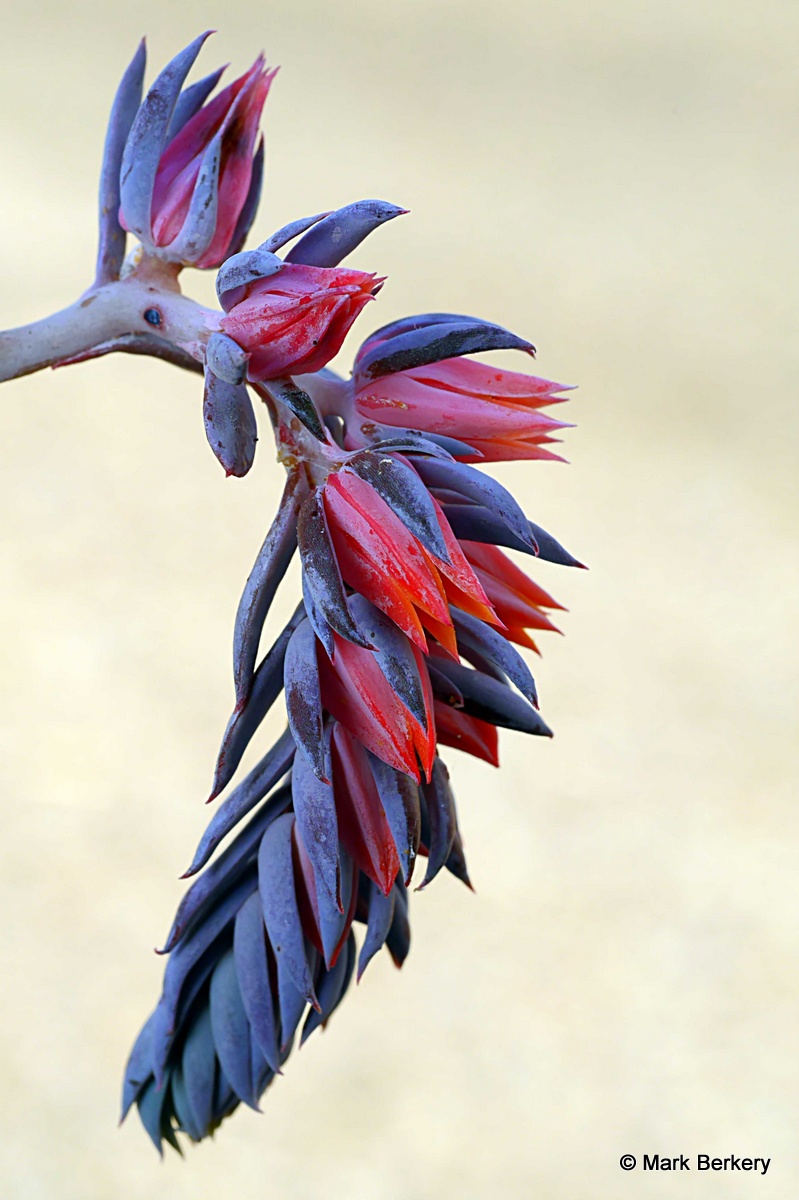
You’ve heard the saying ‘as within so without’?
I’ve been observing this flower spike grow for the last few months. It must be the slowest growing flower I have seen, and everything in its time. There were a few scale bugs sucking on its sap and a few ants farming the bugs for their ‘dew’. A little world of inter-dependence, or exploitation – ants feed off the bugs, mind interprets it. Meaning is mutable with perspective, fact is fact.
I don’t do flowers much but that might change, who knows, change emerges in time with experience. Flowers don’t run away and hide, I can pick one if there’s enough in the ground or container and bring it to my level for comfort, and take longer if necessary to get composition and background right, time to experiment, time to play. Some obvious considerations.
They are another class of life-form, different to the mobile, often camouflaged, action oriented insects I am predisposed towards, and perhaps under-appreciated by me so far. More passive, stationary, receptive and often loudly advertising their qualities in colour and form which makes them relatively easy to find, though not so easy to capture well.
And though it can’t be captured for re-presentation scent, the invisible but still sensible, is a characteristic not much acknowledged – being bred out in some cases. Some are very ordinary, to my nose, and some are exquisite, transporting even. The right flower at the right time gently smelled serves as a reminder of real beauty, the beauty inside.
Yes, I think I will give more attention to the flowers. It may be an inevitability whose time has come and no doubt the practise and art will evolve if I involve myself in it. We’ll see, it’s still just a possibility.
The quality of the received is in the giving, of attention in the first instance, without which nothing is.
It’s why it is said ‘what you acknowledge you get’.
© Mark Berkery ……. Click those pictures for a closer look
*
*
On The Edge …
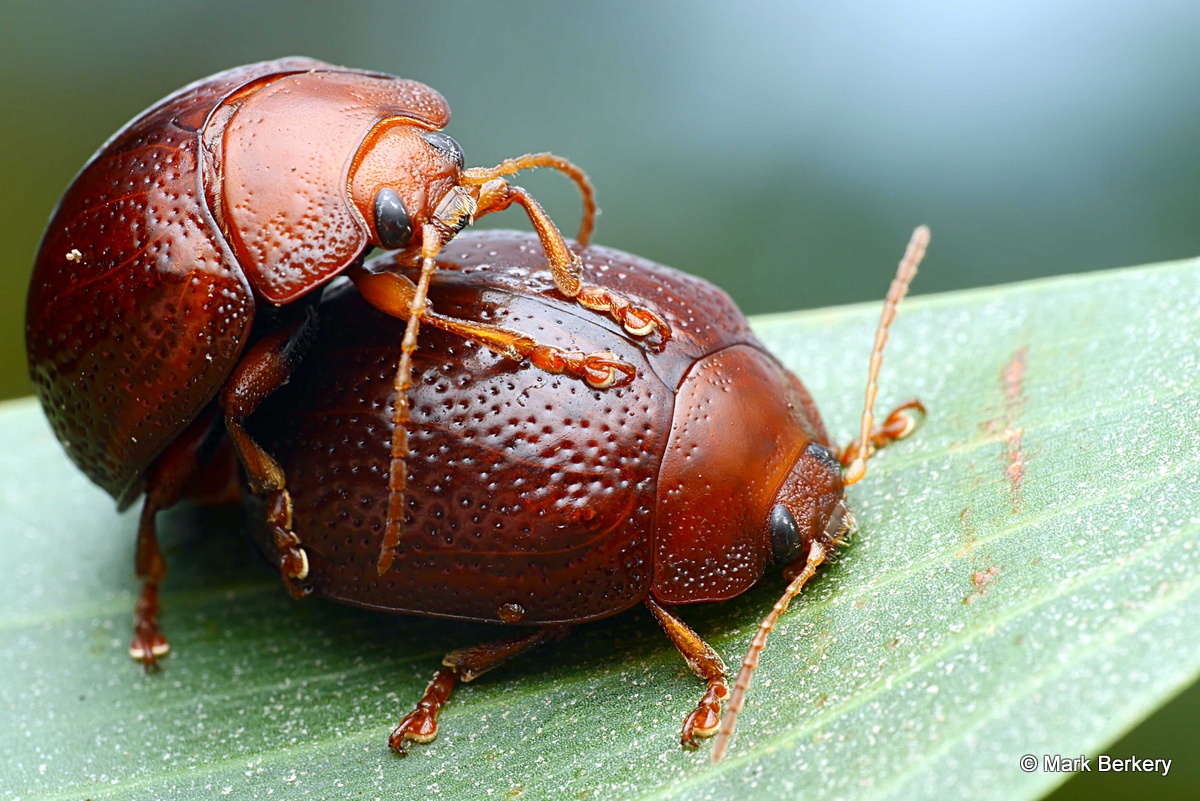
Mating Leaf Beetles. A grandstand view, picked for the shot, replaced and then they were off up the tree.

Come into my arms … says the Clown Spider to the …

Steampunk style? One of Gill’s finds.
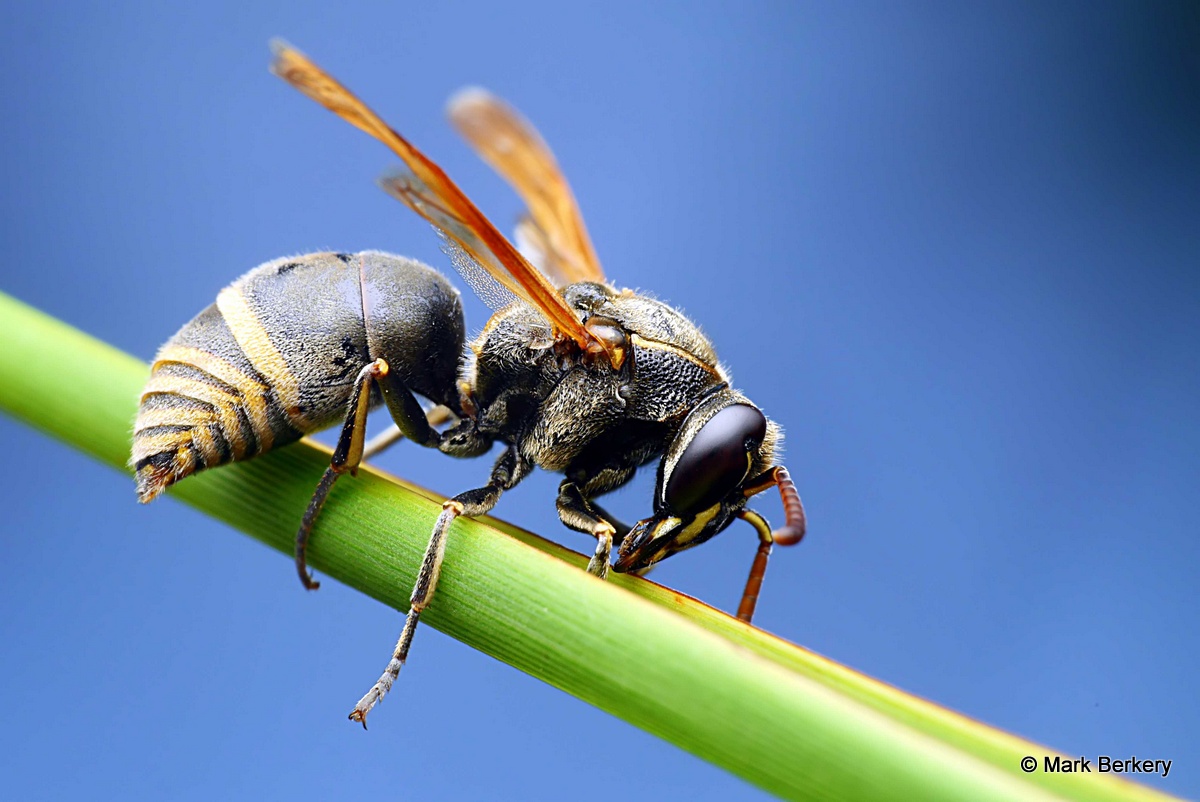
We thought this wasp was in trouble, dying maybe. She was so lethargic and approachable. See her other side.
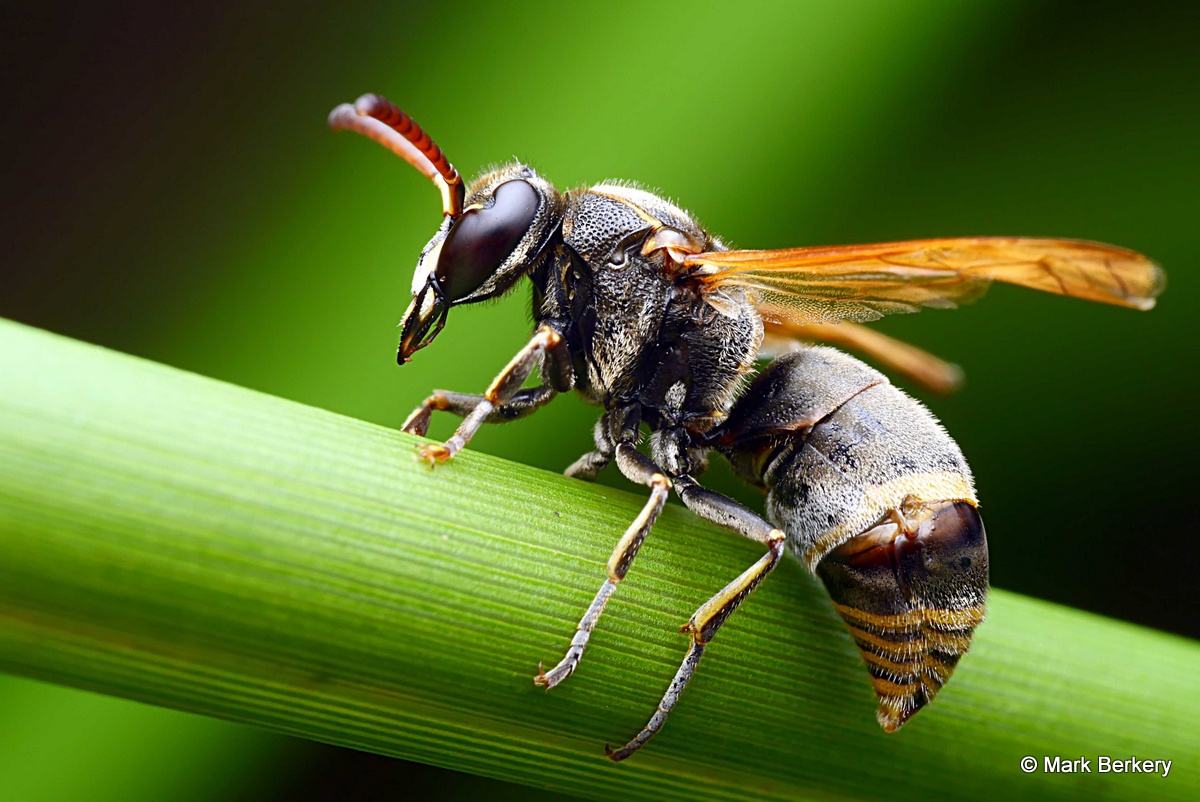
On the abdomen is a small crater-like wound, weeping from under the fold, and swollen. She has been parasitised and the alien life form is growing.
… of the dark vasty deep, of the water treatment plant. Some say an off smell drifts from it but I only smell the sweetness of the earth, with the occasional whiff of active water – can’t smell ‘off’.
Gill and I started in the garden and there was not much to shoot at all, probably something to do with heat and dry – not much rain this year, and rising temperatures. Not encouraging.
So it was off to the local hot spot and though there wasn’t a lot to be found there was more than I could have anticipated, or seen alone.
Bugs were mating in the shade, some bugs dying too, and others just looking fantastic.
Magical nature, deeply touched. The earth turns on this stuff.
© Mark Berkery ……. Click those pictures for a closer look
*
*
The Strangest Thing …
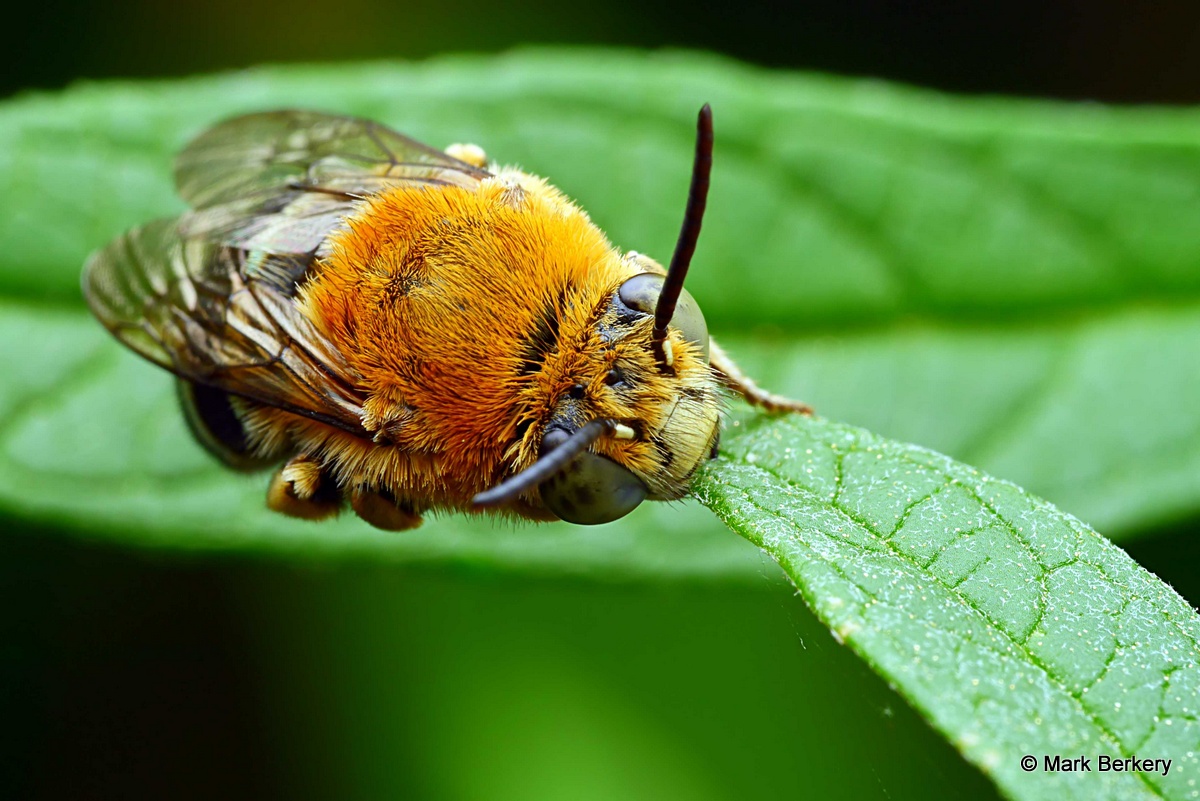
What I could get in a couple seconds, with leaf as background contrast.

Shifted positions slightly, had the time for the angle.
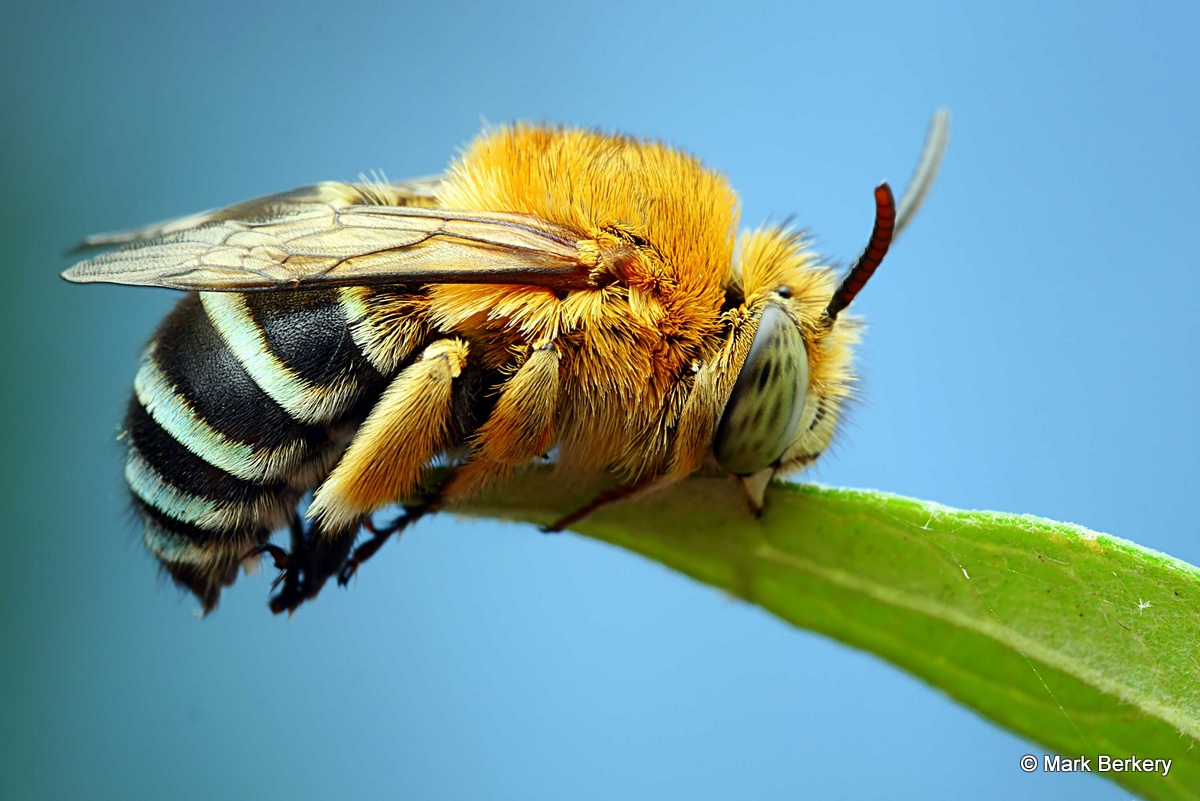
And the shot I wanted, because she stayed long enough and I didn’t shock her sensibilities.
Looking at the comings and goings in the garden recently I noticed a Blue Banded Bee behaving oddly. It isn’t unusual to see them land on a leaf’s edge, stretch their legs and preen for a second or two, or buzz the leaf’s edge or surface as they continue flying along it, but this one stopped as if it was time to sleep.
As soon as I saw it I moved in to take the shot I could get, then I moved a little for the angle I wanted. I didn’t think I’d have the time for that but she – four bands means its a female – was still in position so I went for the shot I wanted, with a little careful adjustment of elements – side on with a good clean background.
And she still didn’t move. Then, as I stood back, she began to fly but couldn’t get enough lift and fell to the grass. I went looking for her but she had disappeared into the forest at my feet and I don’t know what happened next.
A bee in this situation would normally climb the nearest grass stem and use it to launch from but I didn’t see her again. Sometimes the body just doesn’t get back up, sometimes the eye just doesn’t see.
Me? Not there yet, but looking at inevitability from my grass stem … :-)
© Mark Berkery ……. Click those pictures for a closer look
*
*
Hemispherical Living …
Do you ever wonder what it would be like to live in a hemisphere?
Nor do I. But since I brought it up let’s have a look.

The Thinking Beetle.
Hmmm! That feels … truncated, like half a sphere would.
Maybe it’s spherical living that’s over-rated, living in a head for instance.

Ooh, what’s that?
What’s it like living in a spherical head then?
Well, first of all, can I actually fit in a head I can imagine? I don’t think so.

Oh, never mind …
And there’s the catch, thinking of living in or as anything is very limiting.
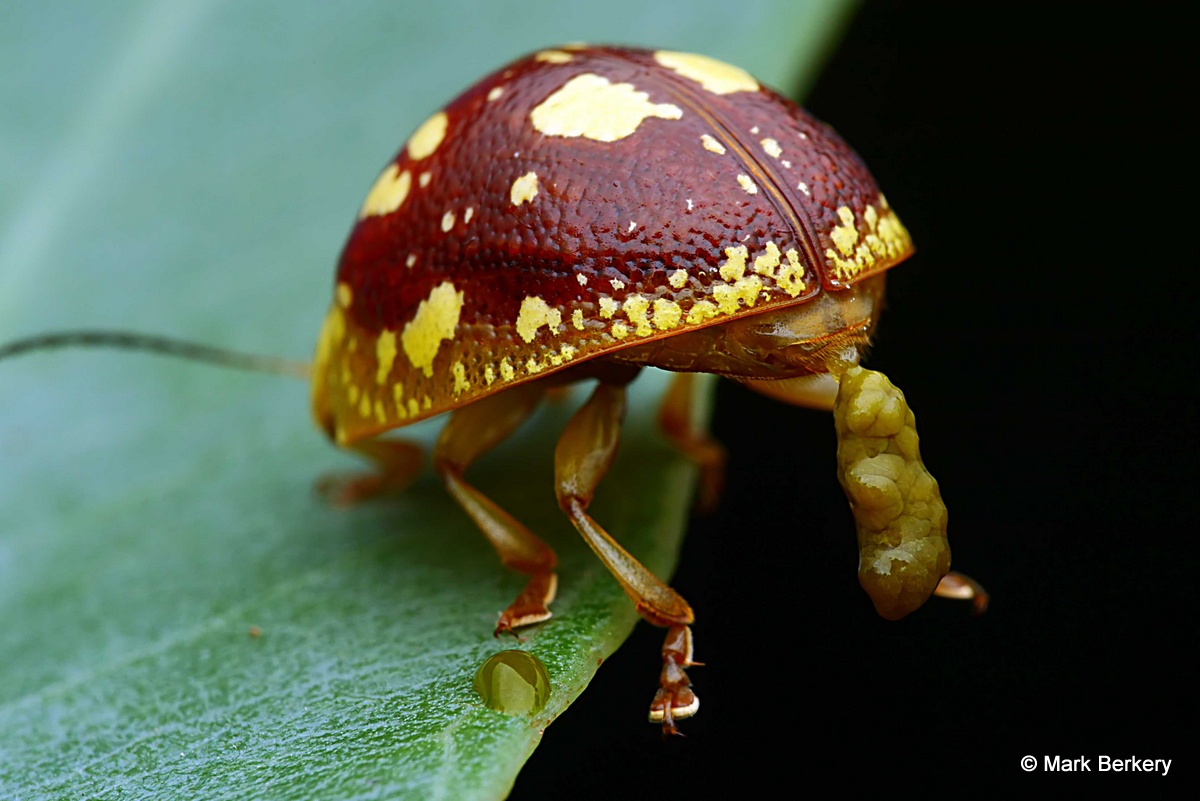
Straight down to business.
Thinking is limiting …
*
Macro Nature Photography …
… the why, the where and the how.

Looking in the mirror.
Historically, time in nature has been prescribed for the convalescence of body, mind and spirit. There is a simple reason for this. There is little for the thinking mind to go to work on in nature. So being in nature is, fundamentally, a holiday from the thinking mind.
This is how I started doing macro nature photography. I was used to a very busy and stressful worldly life and it wasn’t enough, or it was too much. It was making me ill and I needed to do something about it, to mitigate the detrimental effects of ‘busy’ living, and I saw the practical value of spending time in nature.
For it to work best it helps to know something of the process.

No, not that process.
The process is simplicity itself. If being in nature is in fact beneficial to the whole being what is it about it that makes it work? Attention, what you consciously focus your attention on.
If you go into nature and take your worries with you, think about what stresses you, you aren’t really in nature at all, you are still in the world of busyness and stress. When we go into nature we tend to do this thinking subconsciously, habitually, and the need is to break the habit with a conscious effort.
It’s only an effort to begin with. And after a short while, knowing what you are doing, it becomes a pleasure to simply hear the bird call, see the greenery ever shifting in the breeze, feel the wind in your hair, the sensation of earth under foot, sky overhead.
So, you see the difference? Either your attention is in the world of thinking, or it is in the world of the senses. Two distinct worlds to attend to, if you take the time to look.
And as with anything else the more time you give to it the more it gives back, the more real the effects of it become.
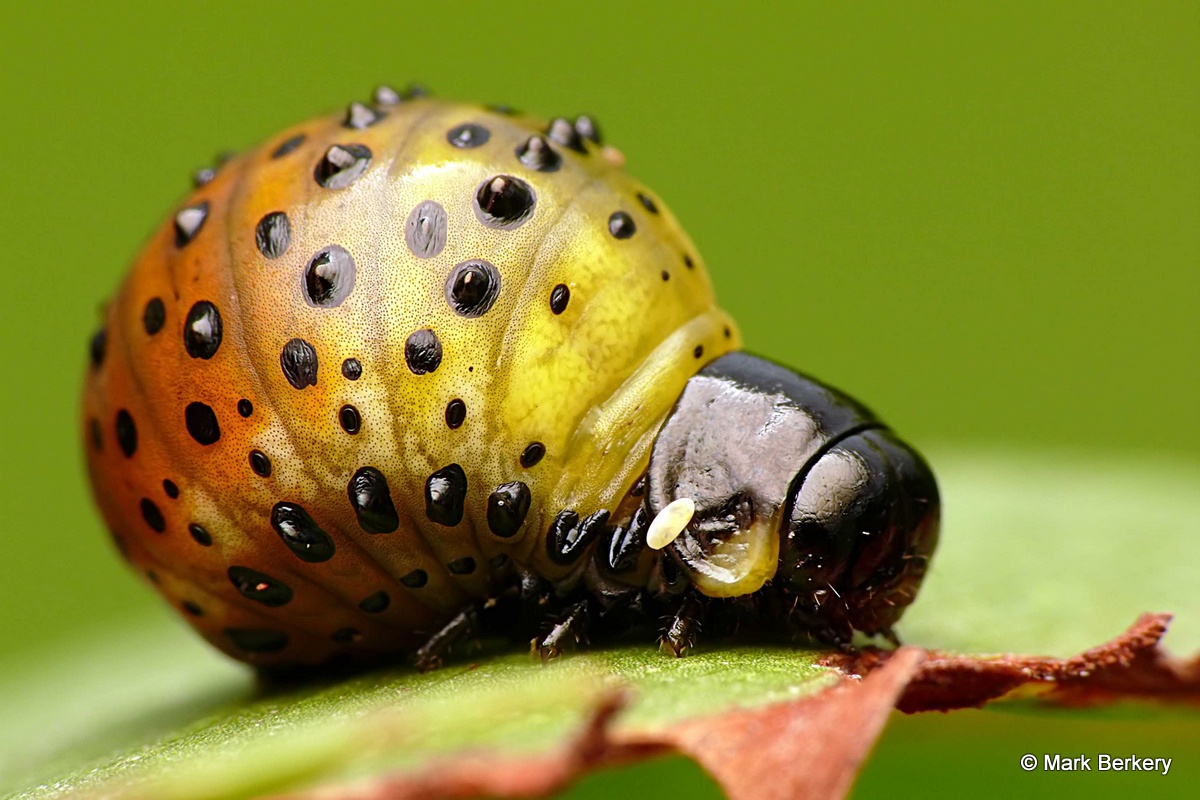
The odd man out.
There are many ways to give time to being in nature and once you get the idea of the difference between thinking and the senses it matters little what way you take. What works for me is macro nature photography.
These days almost everybody in the West has a camera of one kind or another and with little adjustment almost any camera can be used to take unique and interesting macro photographs. Almost every mobile phone has a camera and you can even buy attachment lenses for them now.
And the world of macro is at your feet, you don’t have to travel anywhere to see the amazing colours and designs of nature. Nature can be sensed in a single leaf, or in the wondrous living insects that can be found and photographed in any garden.
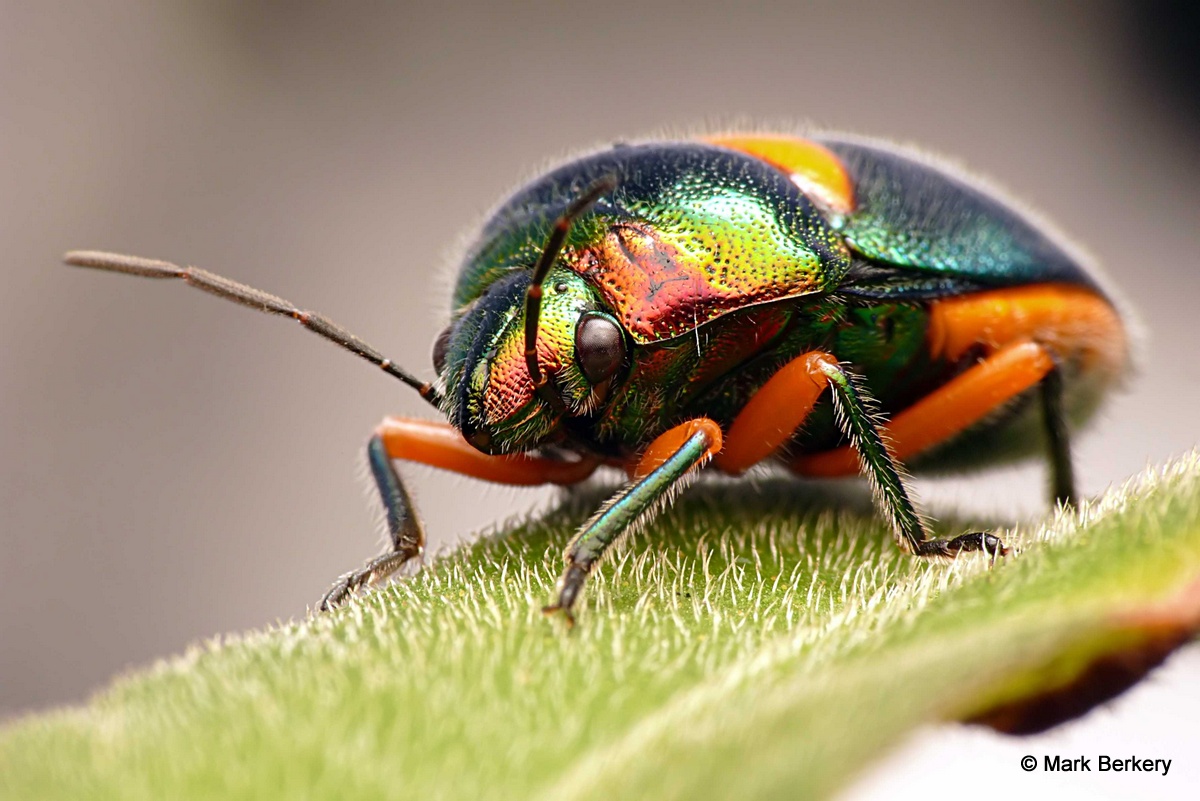
Against a darkening sky.
Now you know why to do it and where to do it, all that remains is the how.
It will take some practise to get pictures like mine but if you give it time and make the effort the attention you give it will be rewarded with amazing macro pictures.
You’ve got a camera, any camera, and it probably has a macro function. Read the manual or go online and find what you need. You will probably find others already use or have used the same camera for macro.
If your camera doesn’t have a macro function you can buy a cheap macro filter at a camera store or online to fit the filter thread of your lens.
Your camera also usually has a built in flash which can be used to good effect, to keep the image sharp and bright. Diffusion, to spread the flash light and make it less harsh, can be a piece of paper towelling held on top of the lens with a rubber band.
There is usually a manual function on a camera whereby you can set the shutter speed (SS) and the aperture (A). Use it to set SS at 1/160sec and faster, and A at f8 to f16. With flash set at on you are ready to go. Or just go to macro mode.
One thing important to know when taking macro photos is your camera will best focus at certain distances. It’s not the same for every camera and you can find this out either in the manual or with a little research – by asking questions, usually at an online photography forum.

Jolly fellow.
The approach to acquiring photos of insects is necessarily one of respect. You are the king or queen of your garden and if you fail to respect the sensibilities of your subjects they will revolt, as every ruler down through the ages has learned to their detriment.
If you don’t want those beautiful insects to run away and hide or attack you show them respect. Remember, they are survivors just like you so they will act and react according to the various stimuli of their environment.
You are one major source of stimuli in their environment and the trick is to not stimulate them into any action or reaction, unless you really know your subject and it serves the purpose without causing harm.
Get to know your subjects and their needs and habits and you will get close enough for a picture – not all insects have the same sensitivities. It takes time and patience and eventually, through careful observation, the insects will tell you all you need to know about them.

In the coneflower.
So you want to take a picture of the beetle in the flower? Well, I suggest you practise on the flower first. But let’s say you’ve done that and you’re ready for the challenge of a mobile subject, albeit slow moving or momentarily stationary.
The first thing to do is look. Is the creature too fast or is it moving and stopping. Is it stopping for a few seconds at a time, more or less. Is it a situation where you can brace the camera for a steady shot at the right distance. If it is you have an opportunity. As soon as it stops or looks occupied with something move in close. Set yourself up for the shot.
The key here is when an insect is focussed on something, anything, eating, mating or just resting they can be so absorbed they don’t notice you moving in their view and will sometimes even tolerate some disturbance. And don’t doubt it, they can see you and will notice you and act or react if you don’t approach carefully.
If at first you don’t succeed don’t lose heart. Nobody got to be expert overnight, persistence with the right approach and technique will be rewarding.
It just takes time and practise in the garden.
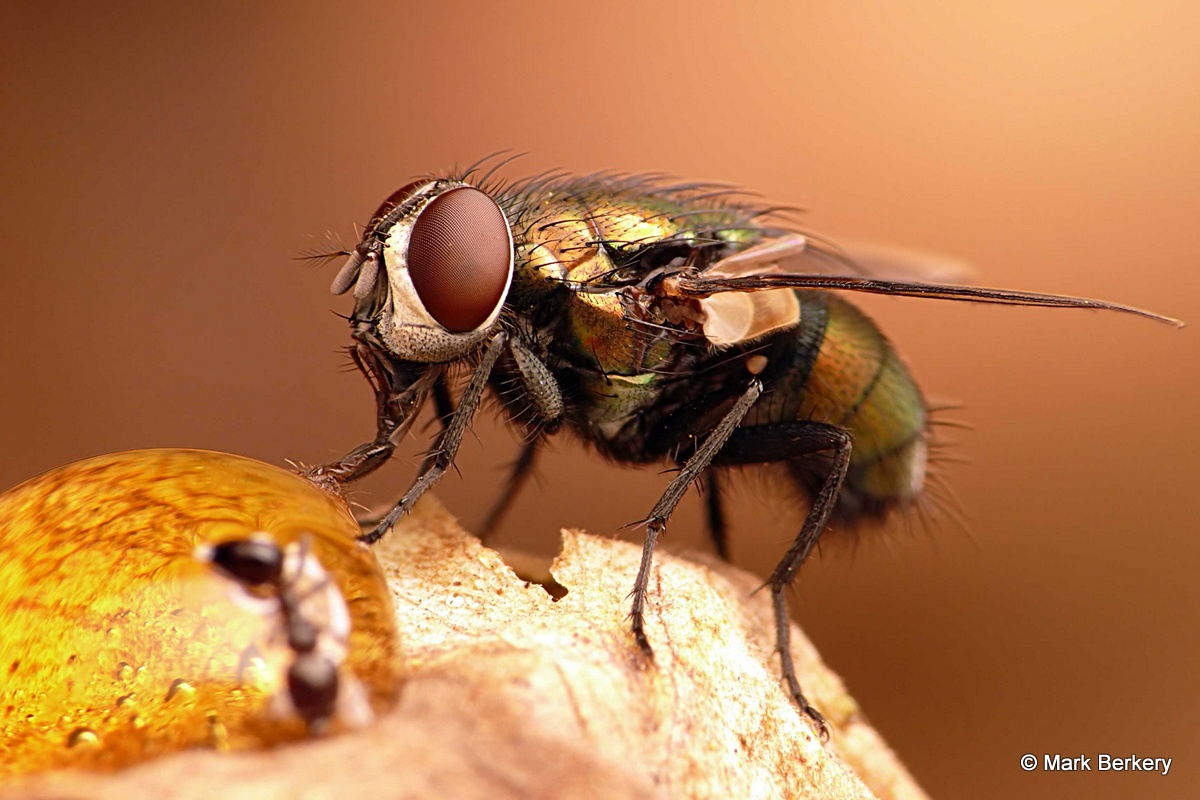
Sucker for a drop of honey.
And there you have it, the why, the where and the how. Of course there is more to it, there always is.
If you want to see the long version have a look at my Macro Illustrated page and scroll down.
*
On the Wild Side

That’s what I call the file I keep all my writing in, can’t remember where it came from now but I suspect it arose out of the fact I never really fit in to our civilised ways and that has never really changed – however I looked, or tried. Maybe it was just an element of self so ‘fuelled’ in the early days it became all encompassing and there was no undoing it, there just isn’t enough time, or will. Who determines such?
Something in me would just rather live and die in the desert, deserted of people and their demands of performance – whatever for. It’s an evolutionary impulse I know, this demand for improvement, but how to engage in the evolution of the human race when one is an alien to it, and alien by it? Perhaps alien is the evolution. :)
I look at the world of men and I see global insanity, the leaders and the led – on the whole and individually. And I see them heading for the abyss, not knowing what they are doing as they party on – business as usual. Nothing wrong with the abyss now, don’t get me wrong.
The only place I see otherwise is in nature or in being, being nothing. Nature has no self-delusive self-aggrandising agenda, and nothing is just that, the space behind and in which it all happens. And these two ‘places’ have no real attraction for the busy man or woman.
Regardless, I believe all is as it should be in order for it to change for the better, eventually – as all things must. And I do what I can to change it where it matters, in me first. The rest takes care of itself – until someone shows me different, and I see it.
There is surely no perfection in existence except it is as it is. The flaw in the jewel, or the jewel in the ‘flaw’?
And just keep going until the mirage turns to a waterhole. :)
Mark Berkery ……. Click any picture to enlarge in a new tab
*


 Nature's Place
33 comments